
/ Blog

Explore CMTEL’s trends blog featuring searchable and filterable posts.
/ Channels
Explore external links to carbon-based materials and design trends.
Core77’s Materials section serves a devoted global audience of industrial designers ranging from students through seasoned professionals.
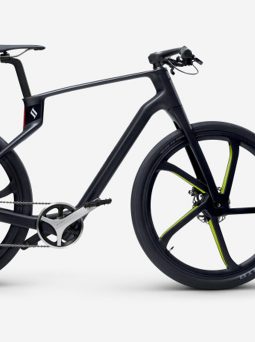
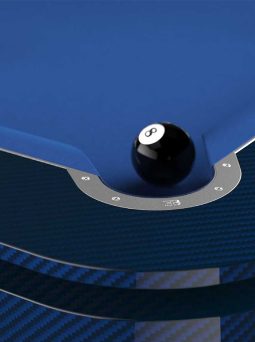

New York based Material Connexion’s libraries and database provide global materials inspiration.
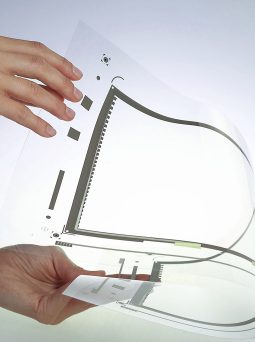

Netherlands based MaterialDistrict’s database, articles and events provide materials inspiration with European emphasis.
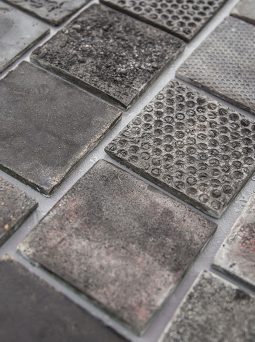

UK based Stylus offers reports, webinars, workshops and events for businesses to forecast cross-industry trends and consumer shifts.

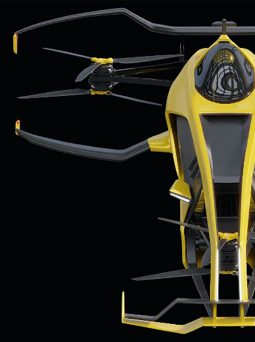

Transmaterial is curated by Minnesota based Blaine Brownell, architect and former Fulbright scholar with a focus on emergent materials and applications.
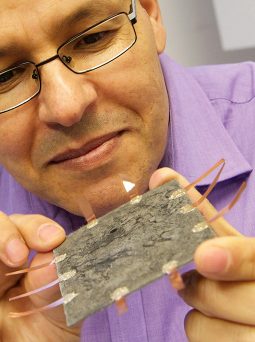

Material
/ Overview
Commercially available since the 1960s, carbon fibre (CF) has some exceptional properties. Made up of carbon crystals, it is available only in black. Carbon fibre is the product of oxidizing polyacrylonitrile (PAN) or acrylic fibre. It is unique for its combination of strength, stiffness and stability as well as its resistance to weathering, chemicals and high temperature.
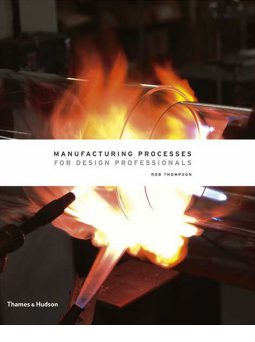
Thompson, Rob – The materials sourcebook for design professionals; Carbon-Fibre-Reinforced Plastic (pg 236).
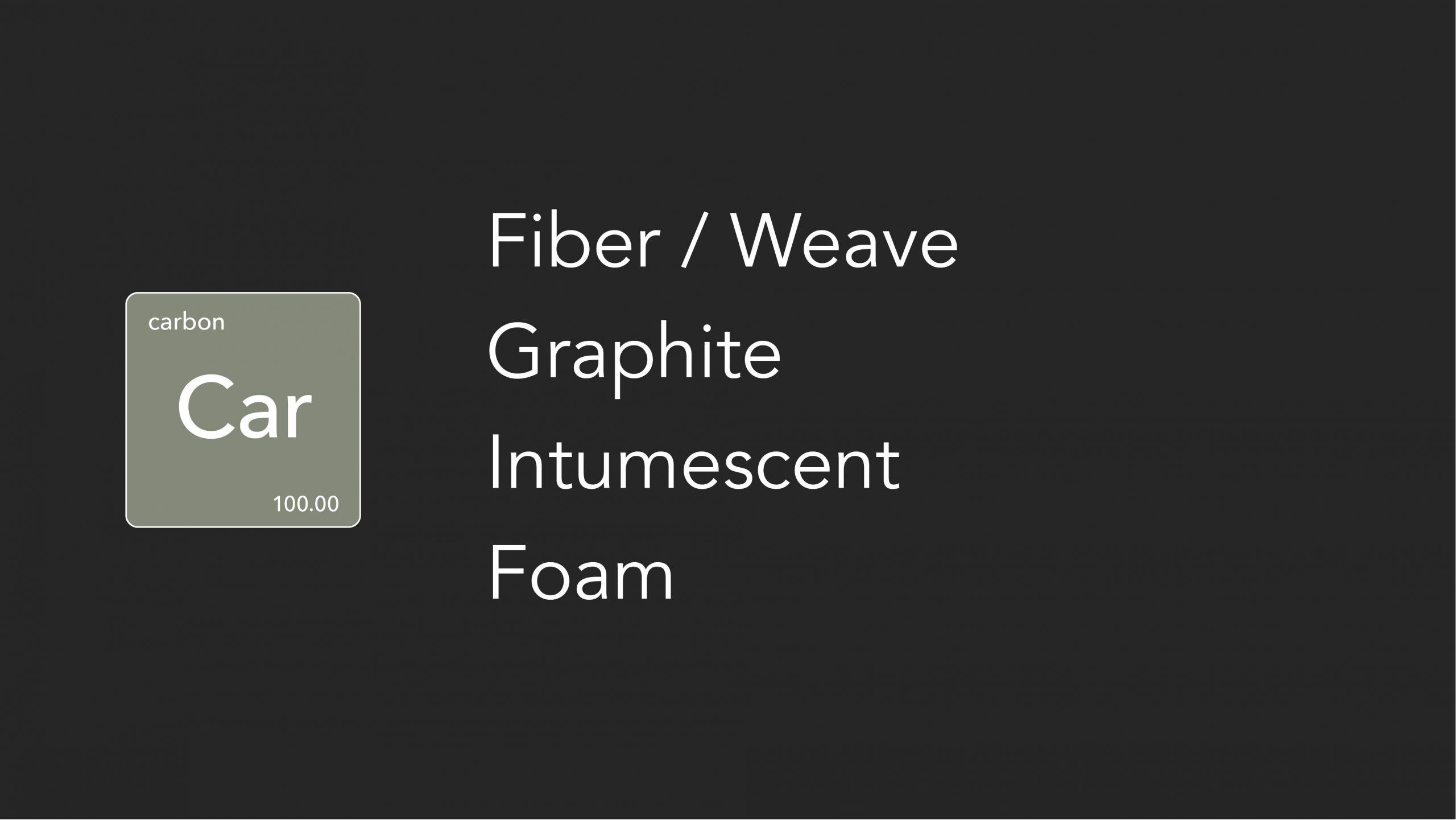
CMTEL’s materials library is organized by a numerical system to identify specific classes within a material family:
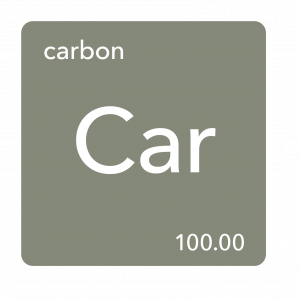
Carbon is designated 100.00. To see the full taxonomy of polymer scroll to the “Taxonomy” section below. For a complete materials taxonomy visit the CMTEL Taxonomy page.
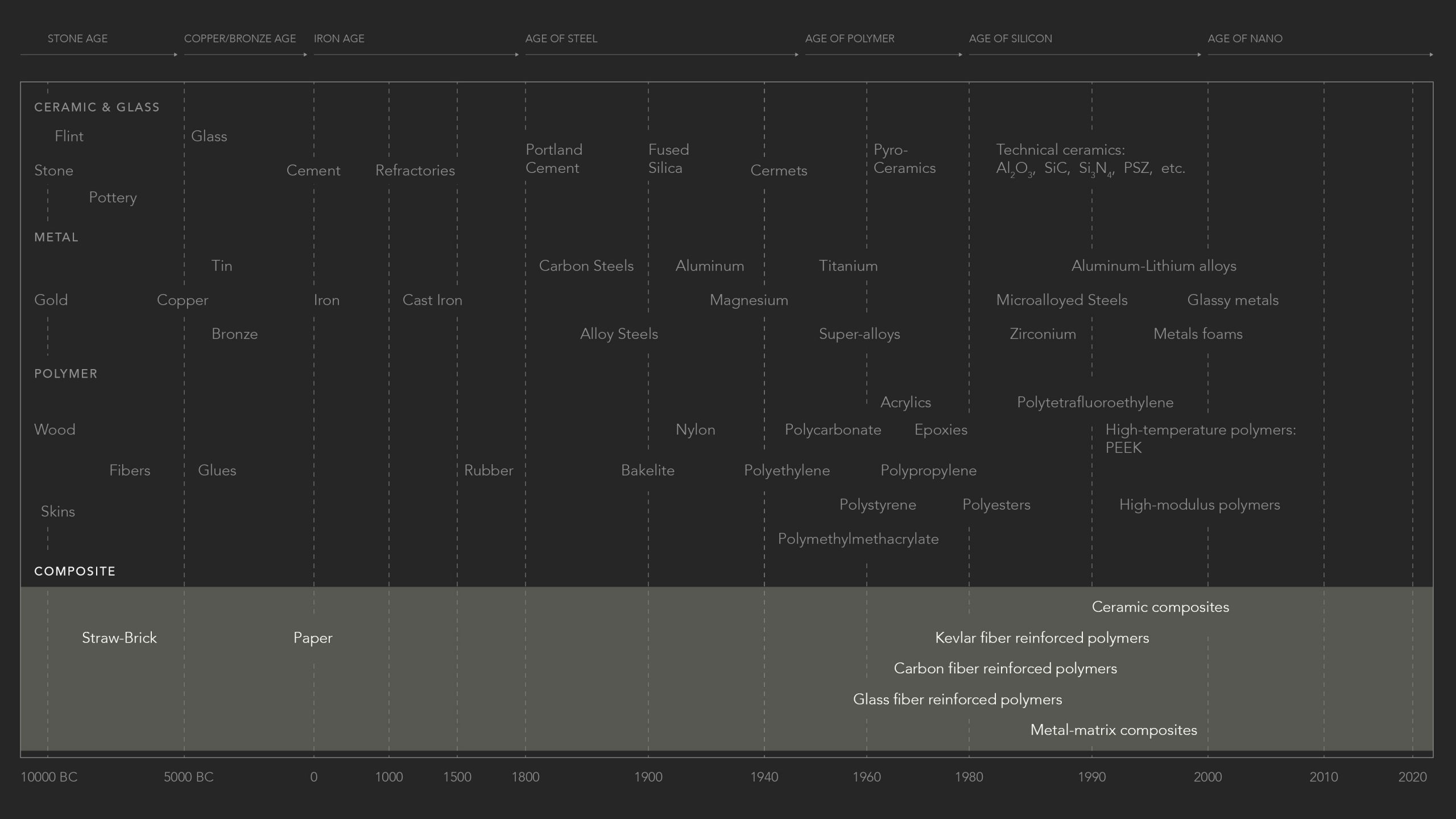
Carbon is one kind of material used in the production of composites and has been commercially available since the 1960s.
click on image to enlarge >
/ Taxonomy
Fiber / Weave
Carbon fiber is created when precursor fiber is oxidized, forming tightly bonded carbon crystals in line with fiber orientation. Carbon fiber contains at least 90% carbon.
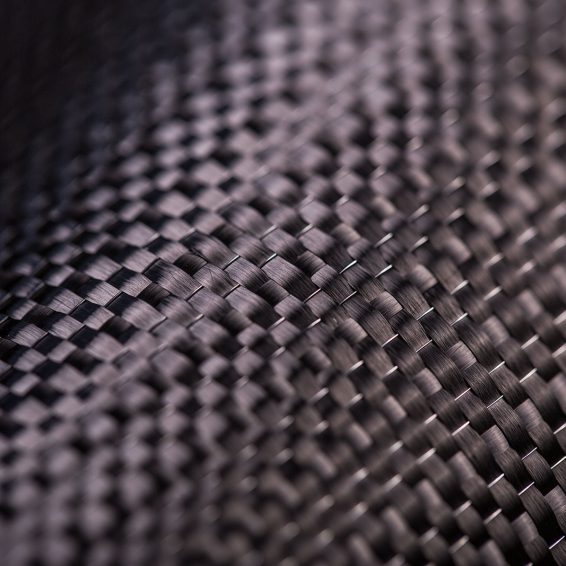
Weaving yarns of carbon fiber produces textiles. These woven fabrics create tension to a form, bringing out the strength properties of carbon fiber.
Graphite
Fibers with higher concentrations of carbon (upwards of 99%) are referred to as graphite.
Intumescent
Carbon fiber’s strong atomic structure, intertwining of fibers, and inorganic nature results in very low flammability.
Foam
Carbon foam results in a stiff, porous structured material which is lightweight, strong, non-flammable, and absorbs sound and radiation.
Further References >
Thompson, Rob – The materials sourcebook for design professionals; Carbon-Fibre-Reinforced Plastic (pp 236-241).
900GPa – Composite Materials Database
Methods
/ Overview
Carbon fiber is manufactured by oxidizing, stretching and heating a polymer, such as polyacrylonitrile (PAN) to over 1500°C (2732°F) in a controlled atmosphere. The process of carbonization takes place over several stages of heating and so requires a great deal of energy. Eventually, long ribbons of almost pure graphite are formed, and the width of ribbon will affect the strength of the carbon fiber. There are different grades (strengths) of carbon fiber, which depend on the manufacturer.
Thompson, Rob – Manufacturing processes for design professionals; Polymers (pg 426).
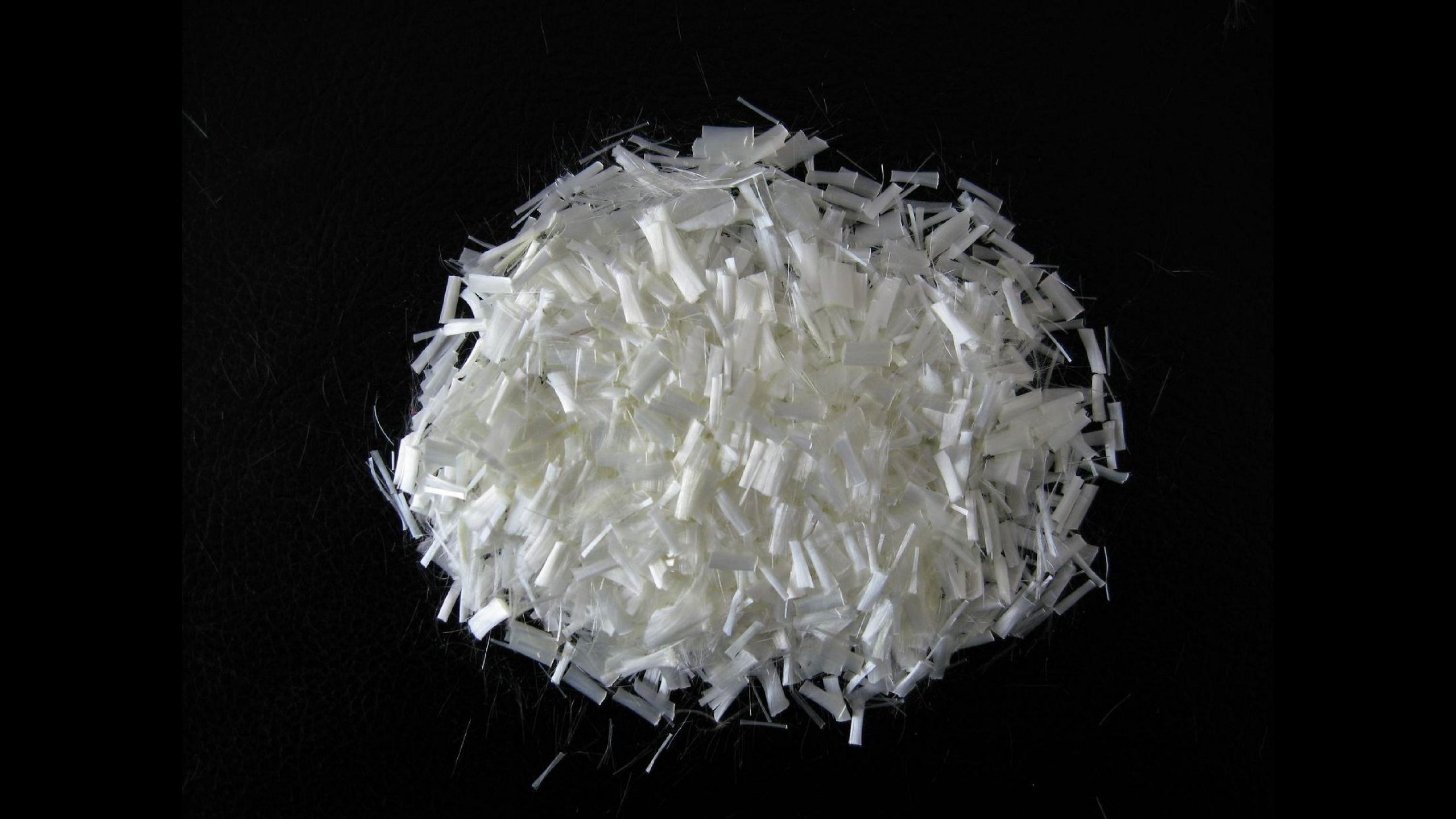
Raw, chopped polyacrylonitrile (PAN) fibers are heated until they carbonize. Then they are stretched to form ribbons.
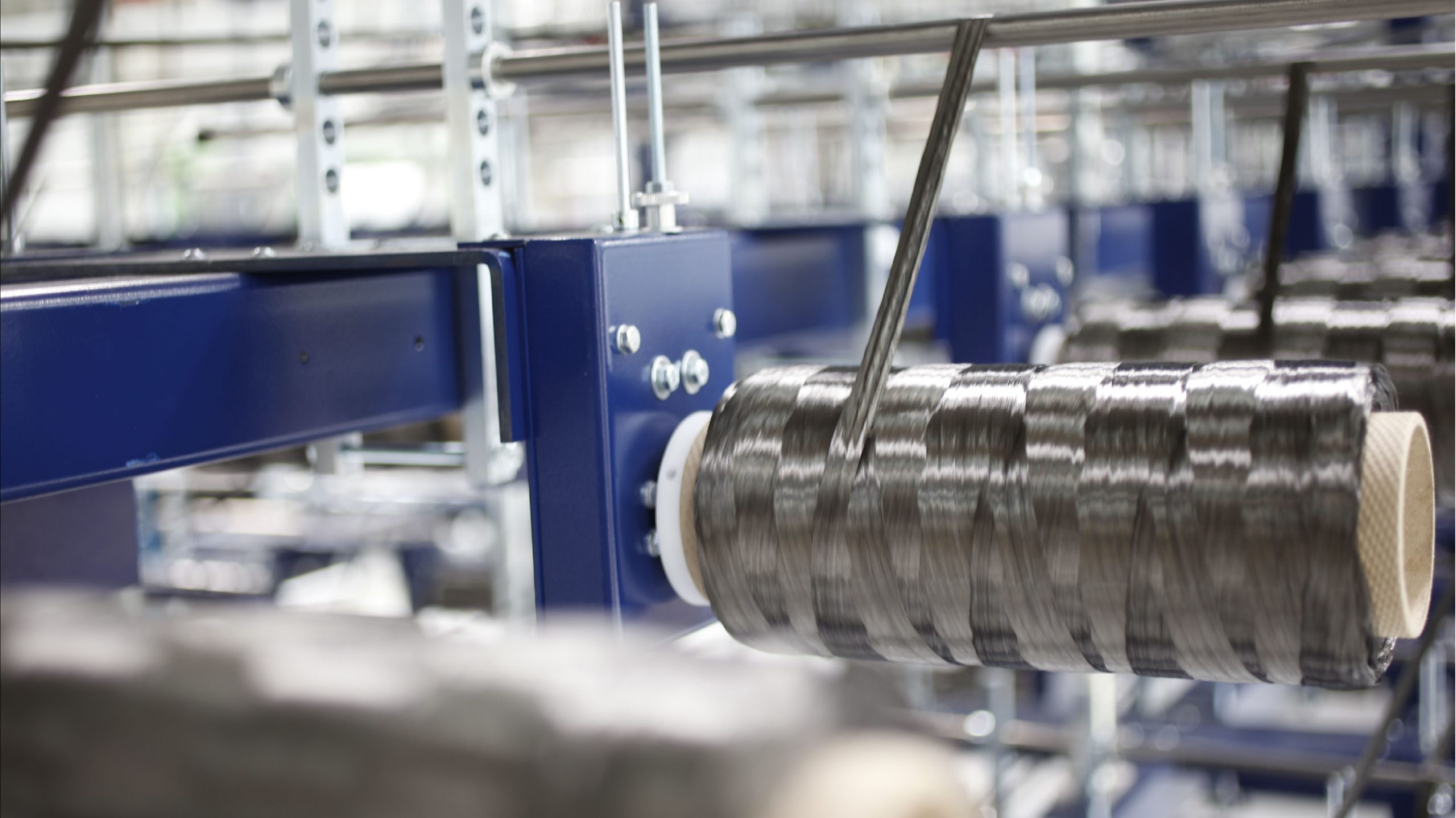
Once the ribbons of graphite are produced they are wound onto a spool. This “carbon fiber roving” is ready to be used to weave textiles or filament wind onto forms.
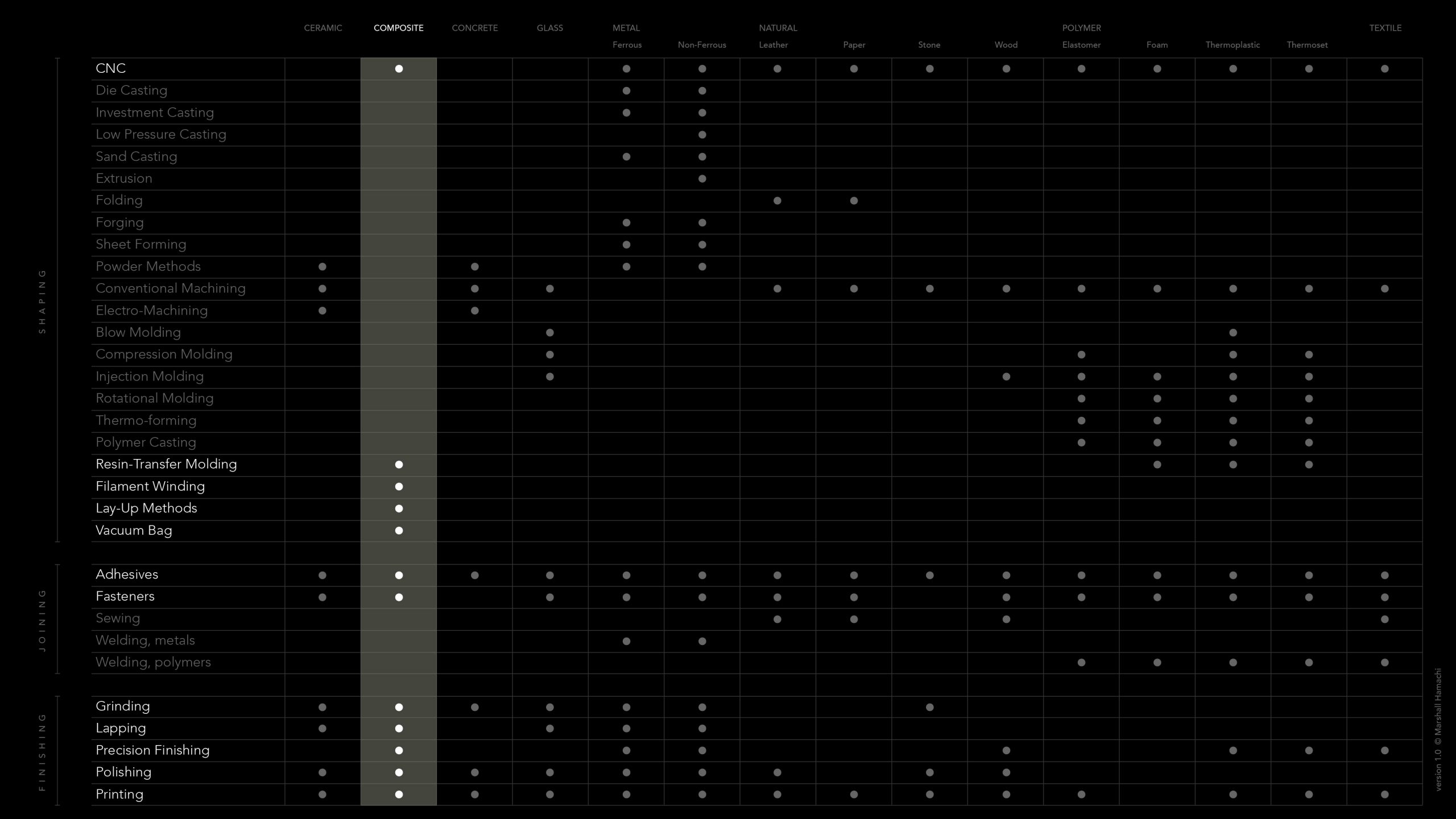
Shaping, Joining and Finishing process methods for Composites.
click on image to enlarge >
/ Manufacturing
Shaping
Composite Laminating
– Wet Lay-up
– Pre-preg Lay-up
– Resin Transfer Molding (RTM)
Dough Molding Compound (DMC)
Sheet Molded Compound (SMC)
Filament Winding
3D Thermal Laminating
– 3D Laminating (3DL)
– 3D Rotary Laminating (3Dr)
Joining
see Shaping
Finishing
Additive
– t
Subtractive
– t
Printing
– t
Shaping >
An inside look at BMW’s carbon fiber …
Fiber to vehicle production
BMW
14:57
BMW composite frame manufacturing
Carbon fiber frame production
BMW
02:41
BMW i3 dry carbon fabrics
Resin Transfer Molding
BMW
02:19
High-pressure RTM for aircraft
Resin Transfer Molding
Fraunhofer ICT
02:38
Space Rocket Propellant Tanks
Filament Winding
Interorbital Systems
17:37
North 3Di: Innovative Sailmaking Technology
3D Lamination
North Sails
02:27
Further References >
Thompson, Rob – Manufacturing processes for design professionals; Forming: Composites (pp 206-231).