
/ Blog

Explore CMTEL’s trends blog featuring searchable and filterable posts.
/ Channels
Explore external links to ceramic-based materials and design trends.

Core77’s Materials section serves a devoted global audience of industrial designers ranging from students through seasoned professionals.


New York based Material Connexion’s libraries and database provide global materials inspiration.
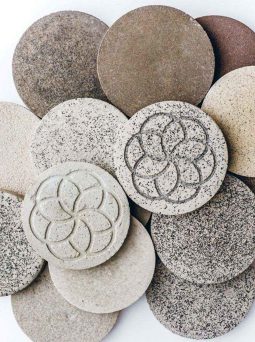
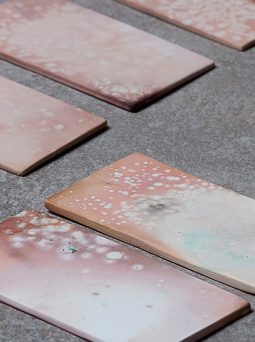
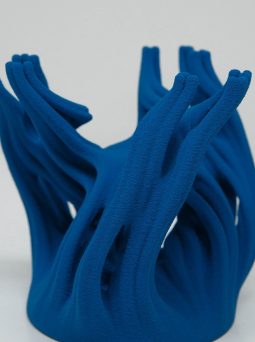

Netherlands based MaterialDistrict’s database, articles and events provide materials inspiration with European emphasis.
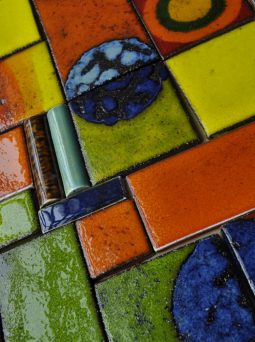
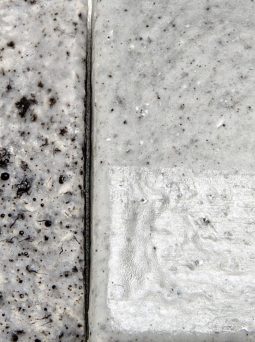
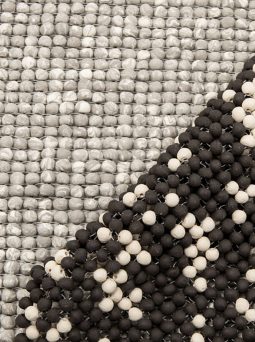

UK based Stylus offers reports, webinars, workshops and events for businesses to forecast cross-industry trends and consumer shifts.
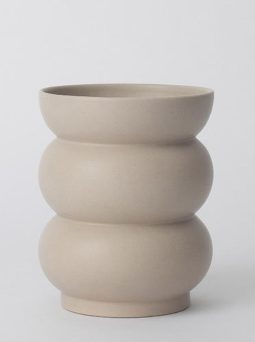
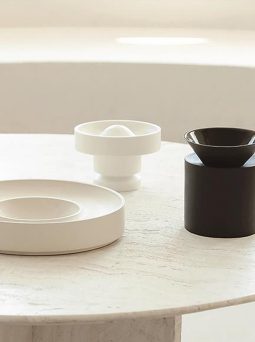

Transmaterial is curated by Minnesota based Blaine Brownell, architect and former Fulbright scholar with a focus on emergent materials and applications.
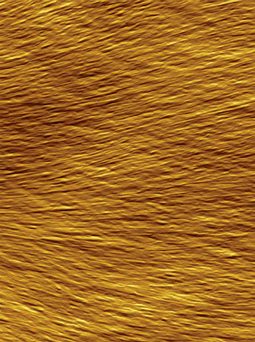
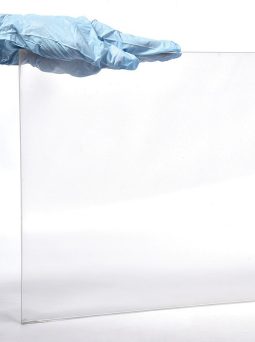
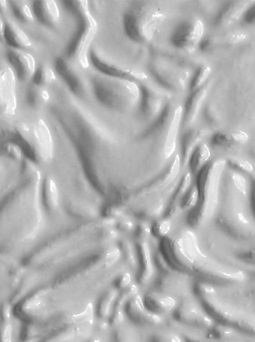
Material
/ Overview
Ceramics are the most durable of all materials… And it is their durability, particularly at high temperatures, that generates interest in them today. They are exceptionally hard (diamond—a ceramic—is the hardest of them all) and can tolerate higher temperatures than any metal.
Ceramics are crystalline (or partly crystalline) inorganic compounds; they include both traditional, pottery-based ceramics and the high performance technical ceramics. All are hard and brittle, have generally high melting points and low thermal expansion coefficients and most are good electrical insulators.
Traditional ceramics, based on clay, silica and feldspar, are soft and easily molded before they are fired; firing creates a glassy phase that binds the other components together to create brick, stoneware, porcelain and tile.
Technical ceramics consist of pure or nearly pure compounds, synthesized by chemical reactions; the commonest are alumina, silicon carbide, silicon nitride, boron carbide, boron nitride and tungsten carbide.
Ashby & Johnson – Materials and Design: The art and science of material selection in product design; Ceramics (pg 203).
CMTEL’s materials library is organized by a numerical system to identify specific classes within a material family:
Ceramic is designated 200.00. To see the full taxonomy of polymer scroll to the “Taxonomy” section below. For a complete materials taxonomy visit the CMTEL Taxonomy page.
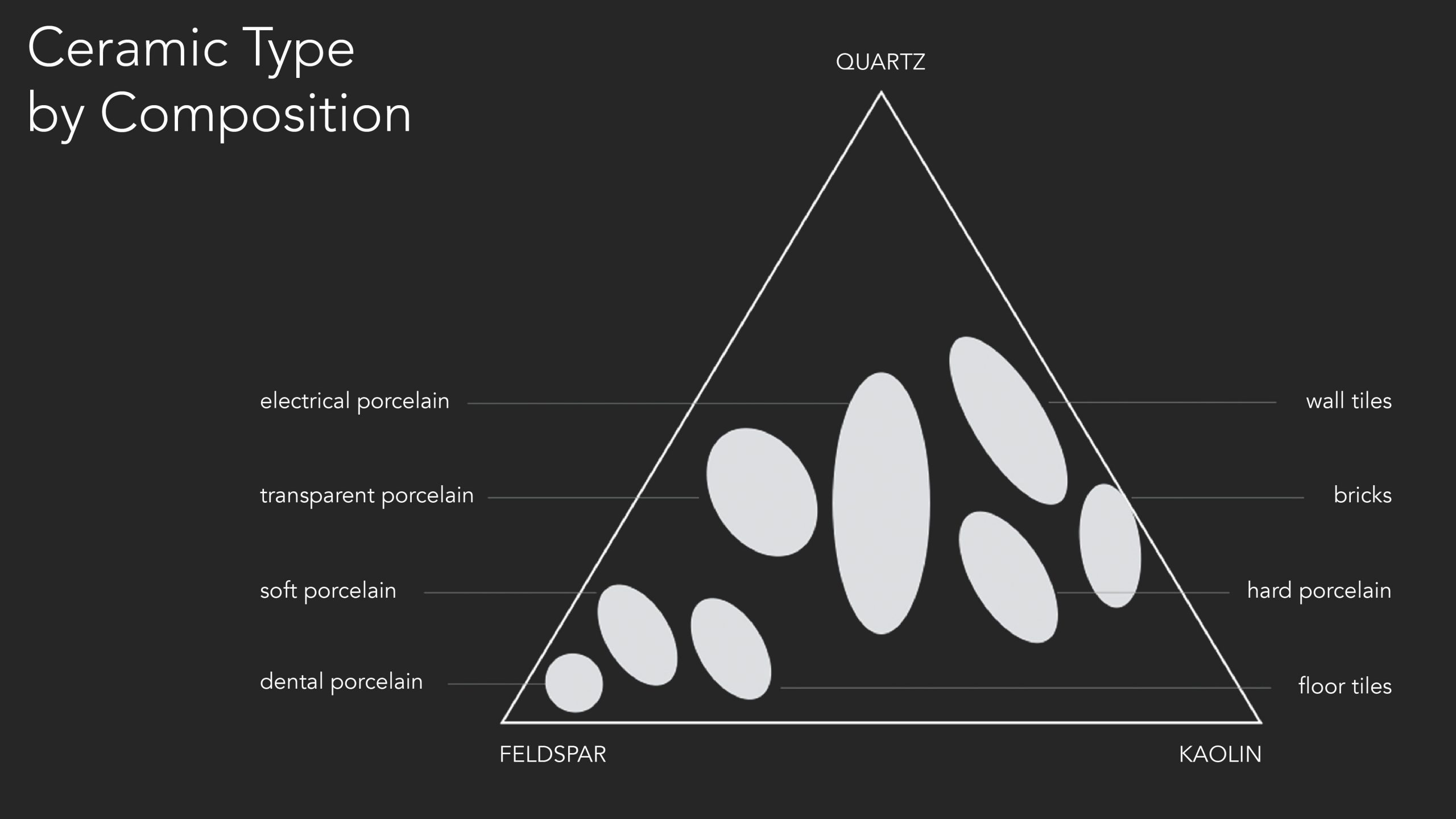
Varying the composition of ceramic ingredients (quartz, feldspar and kaolin) produces different types. Ceramics are generally classified as Pottery or Technical.
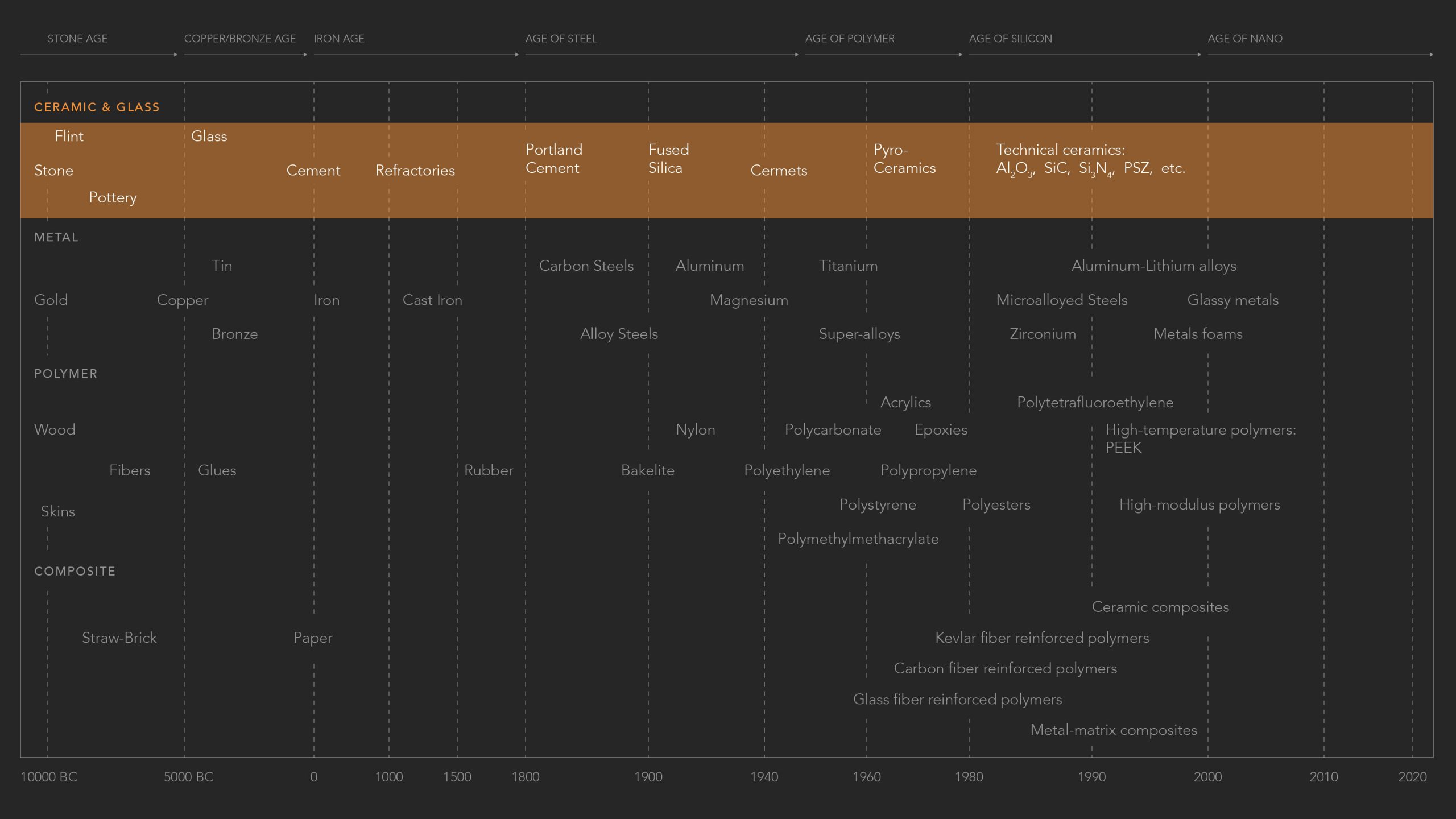
Ceramics date back earlier than 10,000 BC and served as vessels, artwork and building material. The development of refractory ceramics evolved furnace technology to help drive the Industrial Revolution and process metals at an industrial scale. The twentieth century yielded the first technical ceramics whose development continues to advance.
click on image to enlarge >
/ Taxonomy
Pottery
Earthenware
Porcelain
Stoneware
High-Performance
Alumina
Boron Carbide
Silicon Carbide
Silicon Nitride
Tungsten Carbide
Zirconia
Further References >
Kula & Ternaux – Materiology: the creative industry’s guide to materials and technologies; Glass, Ceramics (pp 60-62).
Lefteri, Chris – Materials for design; Ceramics (pp 202-231).
Thompson, Rob – The materials sourcebook for design professionals; Mineral (pp 480-507).
Thompson, Rob – Manufacturing processes for design professionals; Ceramics (pp 488-490).
NIST – Structural Ceramics Database
NIST – Fracture Energy Data for Ceramics
Methods
/ Overview
To make traditional ceramic pieces either slip, paste, or powder/thermoplastic composites are prepared: slip is a liquid suspension; paste is obtained from enriched liquid paste; powder of a pre-fired ceramic is mixed with a thermoplastic.
Once cast, injected, pressed, extruded or thrown, etc., the pieces are then dried-in the open air or inside-then fired. This firing takes place in one or more stages. For earthenware, the first firing (between 1000°C and 1050°C) gives a piece known as ‘biscuit’ or ‘bisque’. This then may be decorated with glazes. The second firing (between 940°C and 980°C) makes the glaze coating vitrify and completes the piece’s manufacture.
Kula & Ternaux – Materiology: the creative industry’s guide to materials and technologies; Ceramics (pp 61-62).
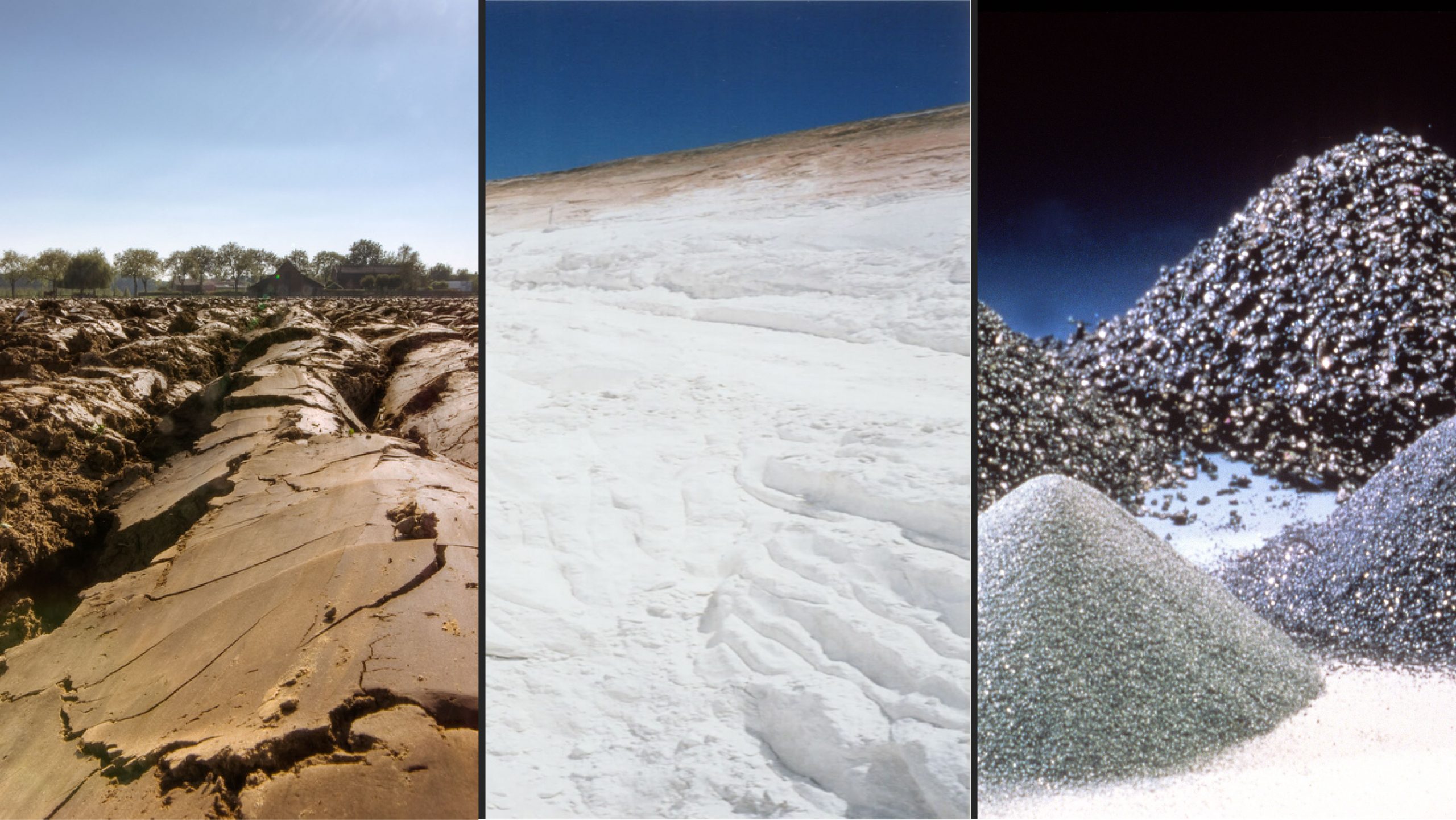
Made by firing and generally from, clay (left), quartz/silica and feldspar, traditional ceramics are porous materials which have vitreous/amorphous and crystalline phases. Clay’s main constituent is kaolin (middle), with a relatively large proportion of metallic oxides, impurities which affect the colour of the finished product. Feldspar plays the role of a fluxing material, cementing the kaolin and silica particles and reducing porosity.
Technical ceramics are synthetic materials (right, as powder inputs) mostly made of oxides, carbides, nitrides, brides, sulfides, titanates, zirconia, etc., according to the desired final properties.
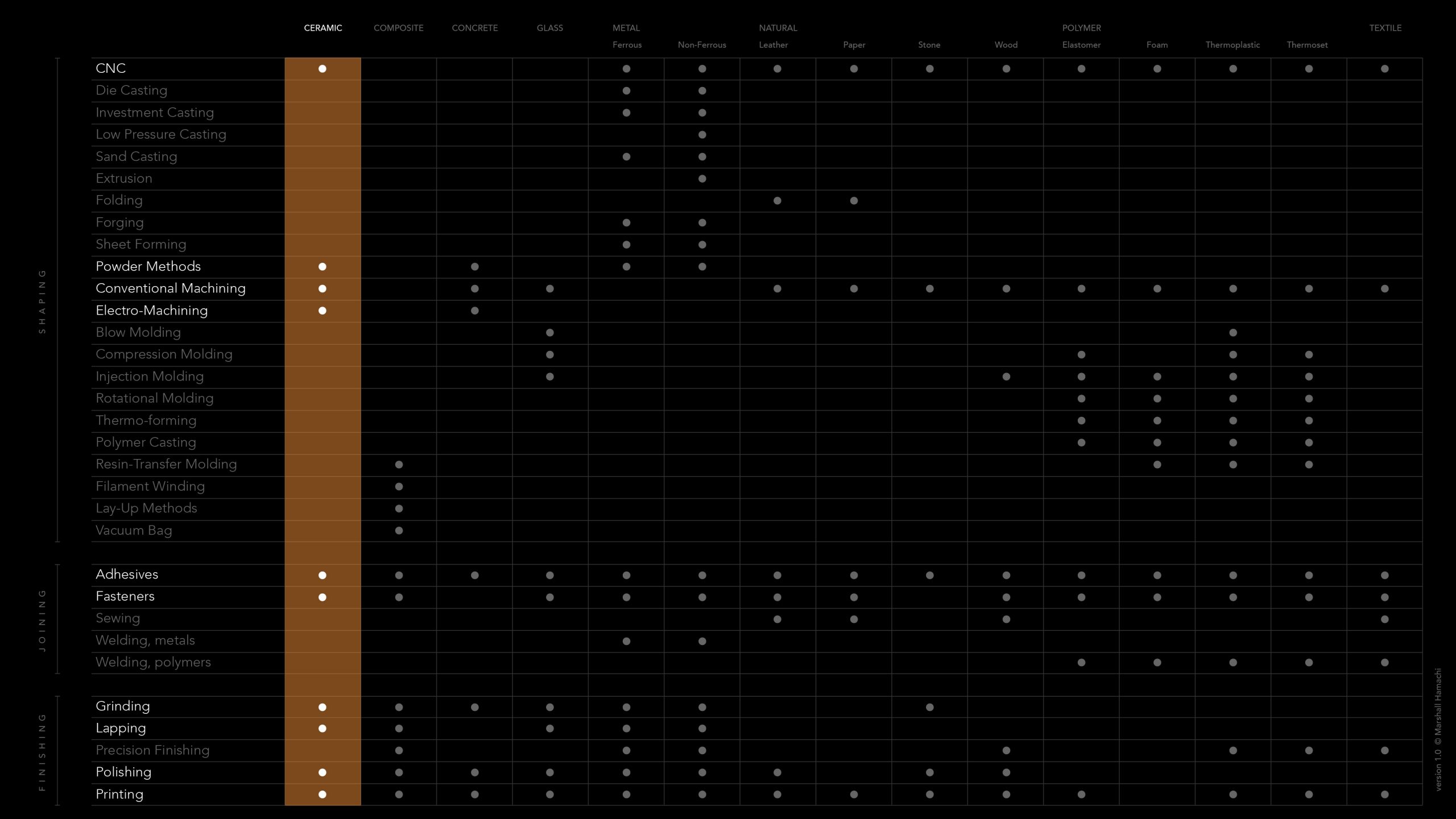
Shaping, Joining and Finishing process methods for ceramics.
click on image to enlarge >
/ Manufacturing
Shaping
Clay Throwing
Press Molding
– Jiggering
– Ram Pressing
Slip Casting
Cutting
– Water Jet Cutting
Joining
see Shaping
Finishing
Additive
– Painting
Subtractive
– Engraving
Printing
– Pad Printing
Shaping >
Blow Molding
Extrusion Blow Molding Process
01:56
Ram Pressing
Ceramic Tableware Manufacture
Saint Gobain Formula
02:30
Slip Casting and Jiggering
Ceramic Tableware Manufacture
Saint Gobain Formula
02:31
Further References >
Kula & Ternaux – Materiology: the creative industry’s guide to materials and technologies; Glass, Ceramics (pp 60-62).
Thompson, Rob – The materials sourcebook for design professionals; Mineral (pp 480-507).
Thompson, Rob – Manufacturing processes for design professionals; Forming: Ceramics (pp 168-181); Finishing: Ceramics (pp 400-407); Ceramics (pp 488-490).
Thompson, Rob – The materials sourcebook for design professionals; Mineral (pp 480-507).
Thompson, Rob – Manufacturing processes for design professionals; Forming: Ceramics (pp 168-181); Finishing: Ceramics (pp 400-407); Ceramics (pp 488-490).
/ Products
How a Toto Drake II Toilet is Made
Toto USA
BRANDMADE.TV
05:28
Slip Casting for Teapots
Richard Notkin
Craft in America
06:54
Ceramic Production
Duravit
02:59
300 Unique Vases
Hella Jongerius
Royal Tichelaar Makkum
04:25
How Heath Ceramics Are Made
Heath Ceramics
BRANDMADE.TV
05:53
Waste to Ceramic
RCA Designers Transform Waste to Ceramic
01:26