
Manufactured Fibers
– Natural Polymer-Based
— Bamboo-Based Lyocell
Database
Material Connexion
MC 7065-01
Manufacturer
Monocel
Norway
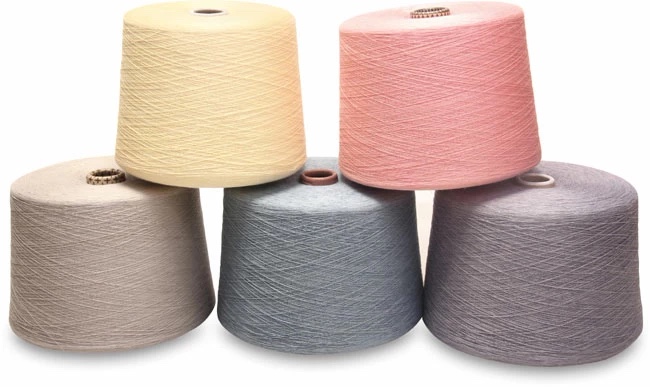
Variety of knitted fabrics containing lyocell fiber, a regenerated cellulosic fiber made from bamboo. Unlike other regenerated bamboo fibers, this material is produced with an organic solvent in a non-viscose spinning process rather than sodium hydroxide or carbon disulfide (corrosive alkalis), resulting in a stronger lyocell fiber, softer than cotton. Bamboo is a renewable resource as it grows extremely fast, has soil improving roots, sequestrates more CO2 than an equivalent cluster of trees, does not require irrigation, pesticides or fertilizers. The bamboo used to create this material grows wild on land unsuitable for food crops. Bamboo is converted into pulp, dissolved in an organic solvent of N-Methylmorpholine-N-oxide (NMMO), spun into fiber, washed, finished, dried and converted into yarn for weaving or knitting into textiles. The solvent as well as any water are reused and recycled in a closed looped system; there are no residues of harmful chemicals and water consumption is reduced significantly. This fiber has a higher wet and dry strength than cotton, is temperature regulating, and can be used to produce both fine and delicate, and thicker, rougher fabrics. Three different fiber thicknesses can be produced, depending on the type of yarn and fabric to be constructed and the fiber can be used homogenously or blended with other fibers such as linen, hemp, wool, cashmere, acrylic, lycra, modacrylic, Sorona®, Kanecaron®. A variety of woven and knitted fabric constructions are available including jersey, interlock, fleece, terry, birdseye, rib, pique; fabric width varies from 1.4 – 2 m (55 – 79 in); weights 85 – 550 gsm (2.5 – 16.2 oz/yd2); and is sold by the meter. The yarn is naturally cream in color but can be custom colored before or after fabric production, depending on the end product. This material is completely customizable: fiber blend, yarn type and structure, fabric construction, finishes, colors. The fiber is free of formaldehyde according to EN ISO 14184-1:2011 and fabrics are tested for colorfastness, piling resistance, abrasion resistance, dimensional stability according to ISO and ASTM standards; results vary based on the fabric construction and fiber composition. Applications include knitted fabrics for underwear, yogawear, t-shirts, sweatshirts; woven fabrics for shirts, blouses, trousers; and stretch denims for jeans, jackets and dresses.
Monocle by Nankatan
Nankatan
01:25