
Bio-Plastics
– Plant-Based
— Wood Pulp-derived
Database
Material Connexion
MC 7037-01
Manufacturer
Södra
Sweden
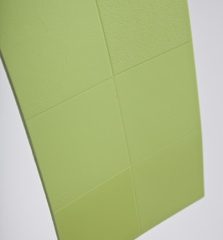
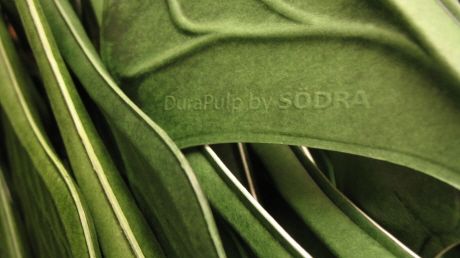
Pulp bio-composite composed of wood fibers and PLA (polylactic acid) bio-polymer from renewable, non-fossil based raw materials. The wood fiber in the pulp comes from FSC (Forest Stewardship Council) and PEFC (Programme for the Endorsement of Forest Certification) certified forests. The composite can remain ‘non-activated’ or can become ‘activated’ with heat and pressure; the properties vary according to how it is processed. Once activated, it becomes very strong, rigid, dimensionally stable with a low water absorption, properties similar to plastic. Non-activated pulp is used in specialty paper where it can impart high folding resistance, high tear strength and high dimensional stability. Non-activated pulp can be taken care of in normal paper recycling, its energy recovered or it can be composted, where activated pulp can only be energy recovered or composted. The pulp is available in bales of approximately 200 kg (441 lbs) measuring 50 x 80 x 60 cm (20 x 31 x 24 in) and can be processed using different techniques: molding (wet forming), airlaid (dry forming), paper sheets, boards and as an additive for different kinds of specialty papers. The pulp comes in white but can be colored during the converting process. Customization is available upon request. The pulp is biodegradable for industrial composting according to SPCR141. It depends on the temperature, moisture content in the compost and the structure of the item (e.g. thickness, density, shape). Tests show that it takes around 100 days to degrade 90% of the material. The pulp has to be treated at a temperature of 170 – 190°C (338 – 374°F) and a pressure of 30-40 kg/cm² (427-569 psi) to be activated. Current applications are for furniture, consumer products and accessories.
DuraPulp: Customized solutions for a sustainable future
Södra
01:25
DuraPulp for Design Products
Södra
02:04