
/ Blog

Explore CMTEL’s trends blog featuring searchable and filterable posts.
/ Channels
Explore links to wood-based materials and design trends.

Core77’s Materials section serves a devoted global audience of industrial designers ranging from students through seasoned professionals.
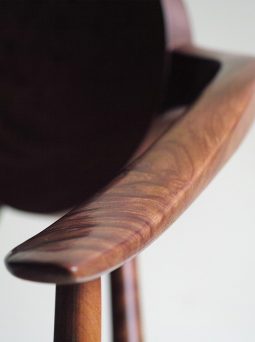

New York based Material Connexion’s libraries and database provide global materials inspiration.
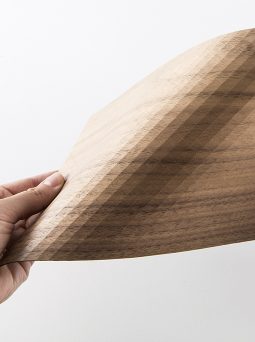
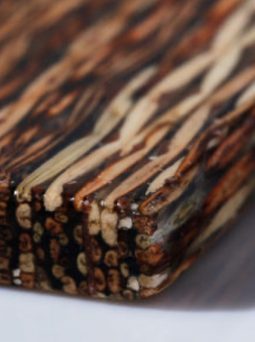
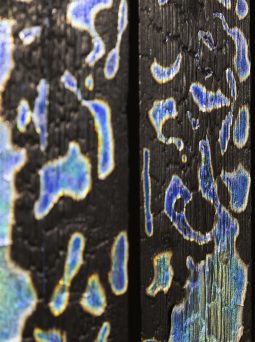

Netherlands based MaterialDistrict’s database, articles and events provide materials inspiration with European emphasis.
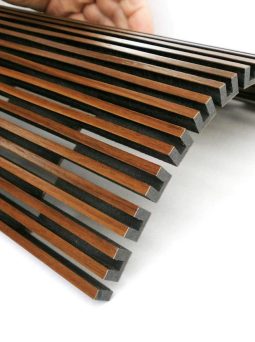
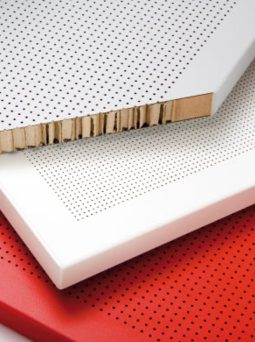
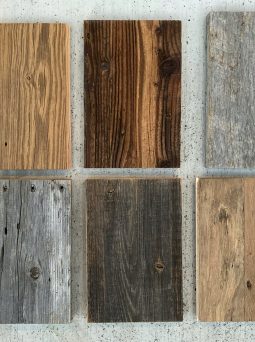

UK based Stylus offers reports, webinars, workshops and events for businesses to forecast cross-industry trends and consumer shifts.
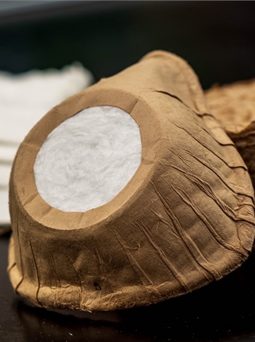

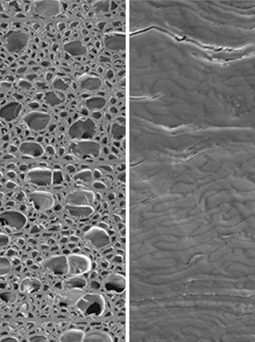

Transmaterial is curated by Minnesota based Blaine Brownell, architect and former Fulbright scholar with a focus on emergent materials and applications.
Material
/ Overview
The qualities of wood are the result of natural growth and the influence of the elements. Each species of tree produces timber with particular strengths, weaknesses and visual characteristics. Some grow fast, tall and straight; others are slow growing with interlocking grain. Over the years certain woods have become essential and irreplaceable in the construction of buildings, musical instruments and furniture. Wood is a sensual material that is warm to the touch and is classified as either softwood or hardwood.
Thompson, Rob – Manufacturing processes for design professionals; Wood (pg 465).

CMTEL’s materials library is organized by a numerical system to identify specific classes within a material family:
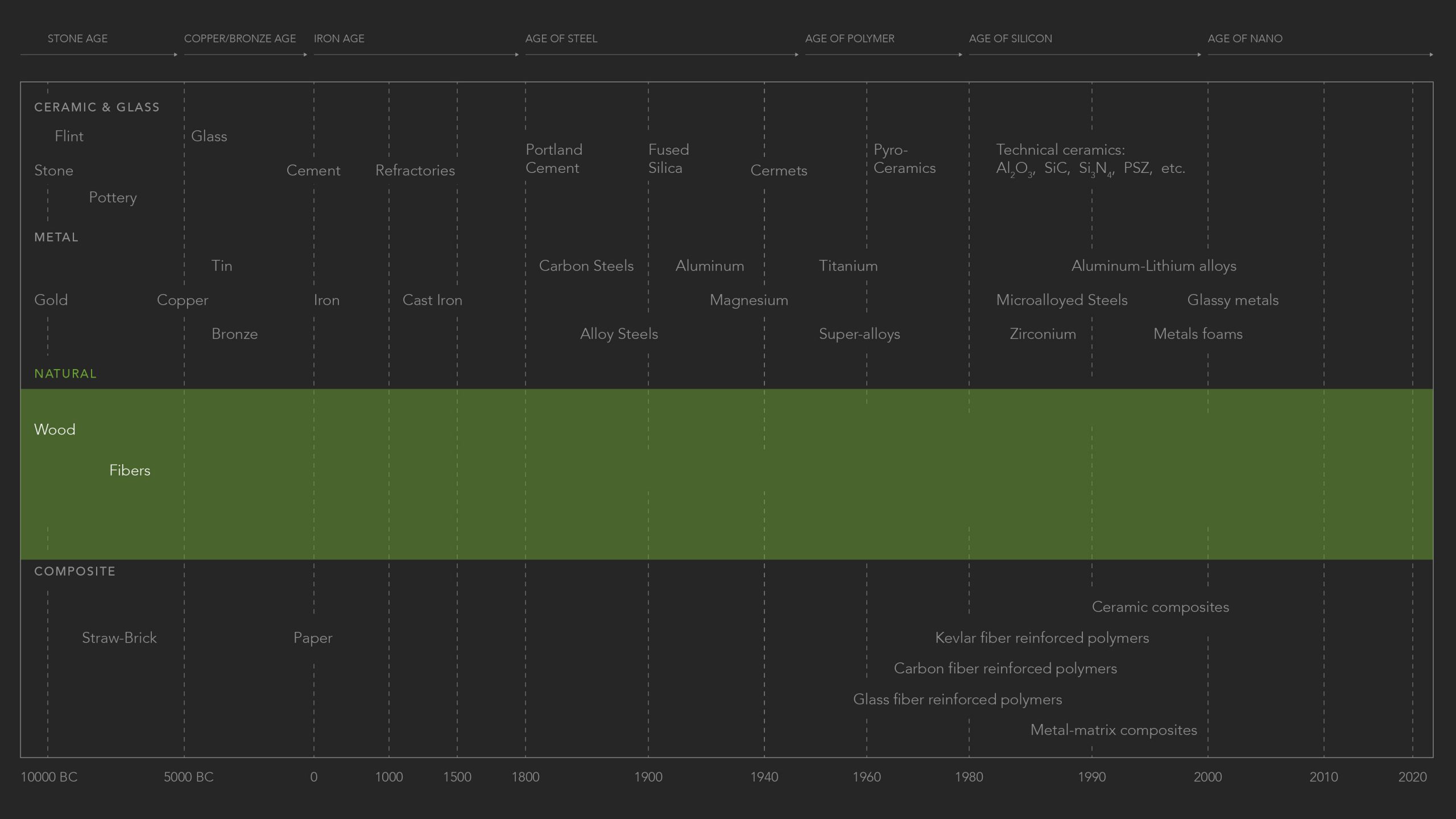
Wood is classified under Natural and designated 805.00. To see the full taxonomy of polymer scroll to the “Taxonomy” section below. For a complete materials taxonomy visit the CMTEL Taxonomy page.
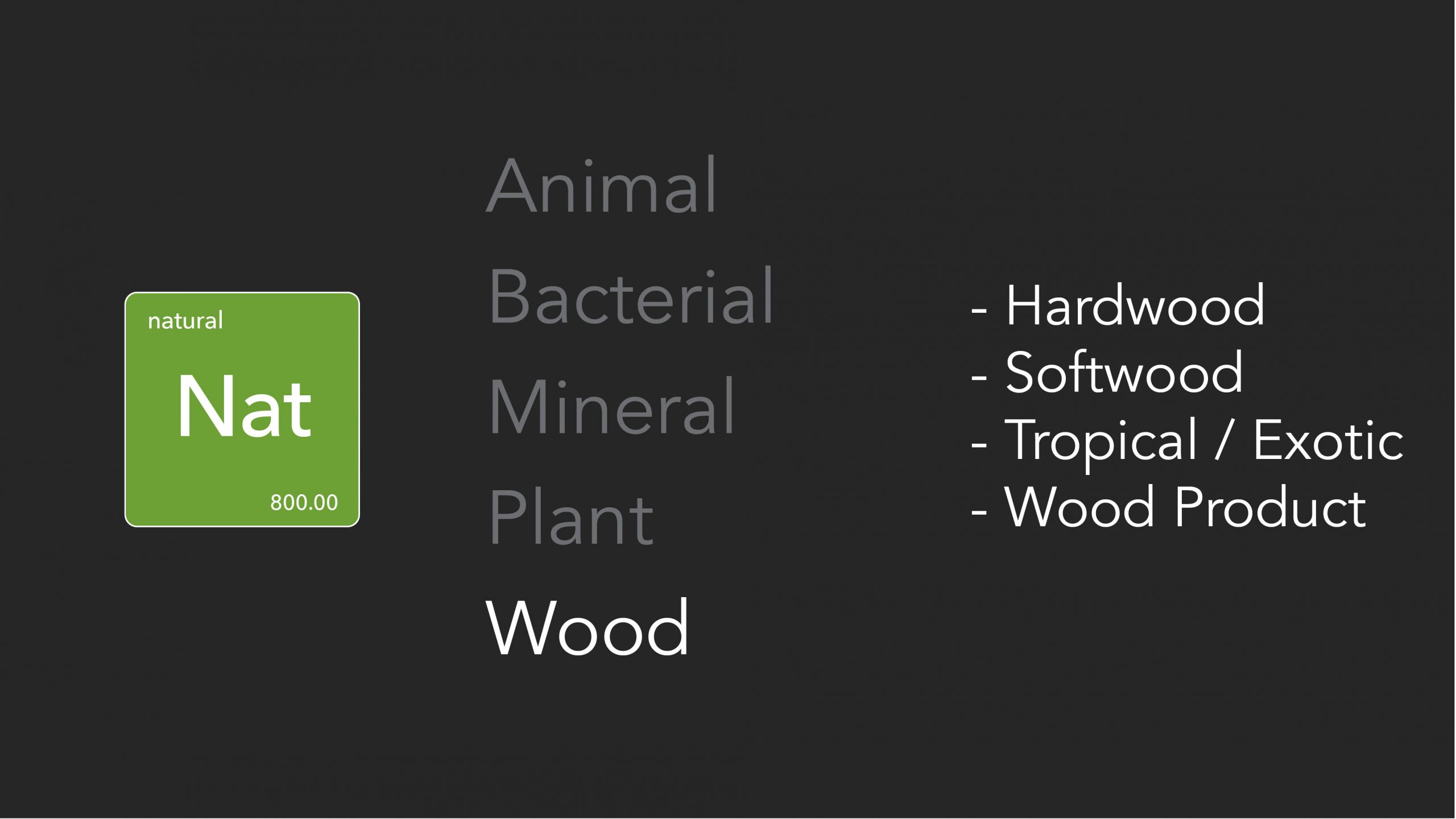
Broad leaved trees generally come from temperate and tropical forests (Africa, South America, central France). These are deciduous trees and are slow growing (120 to 200 years).
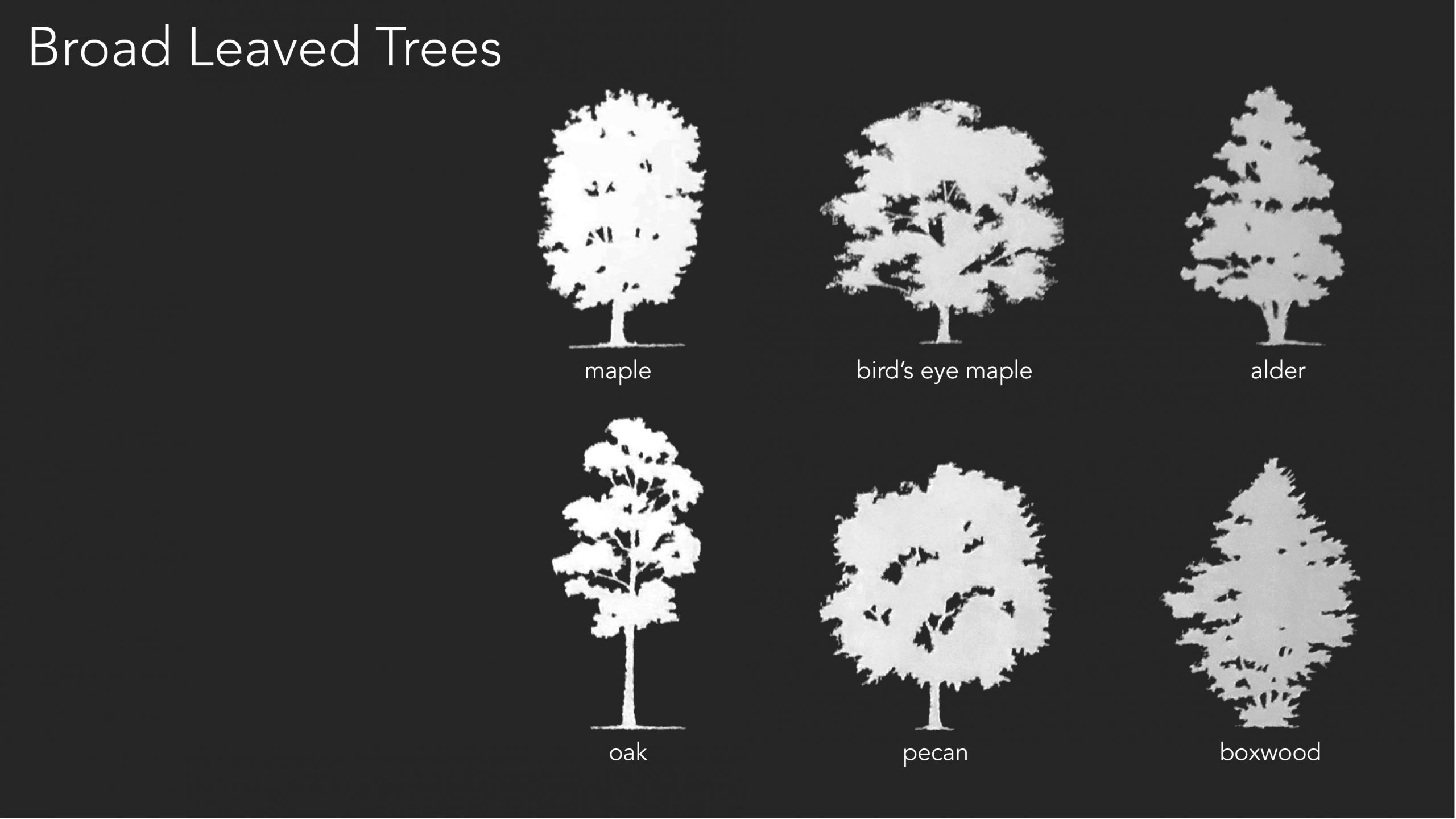
Coniferous trees generally come from the northern hemisphere (Canada, Black Forest, Nordic countries, west of France). These are evergreen trees that are fast-growing (60 to 80 years).
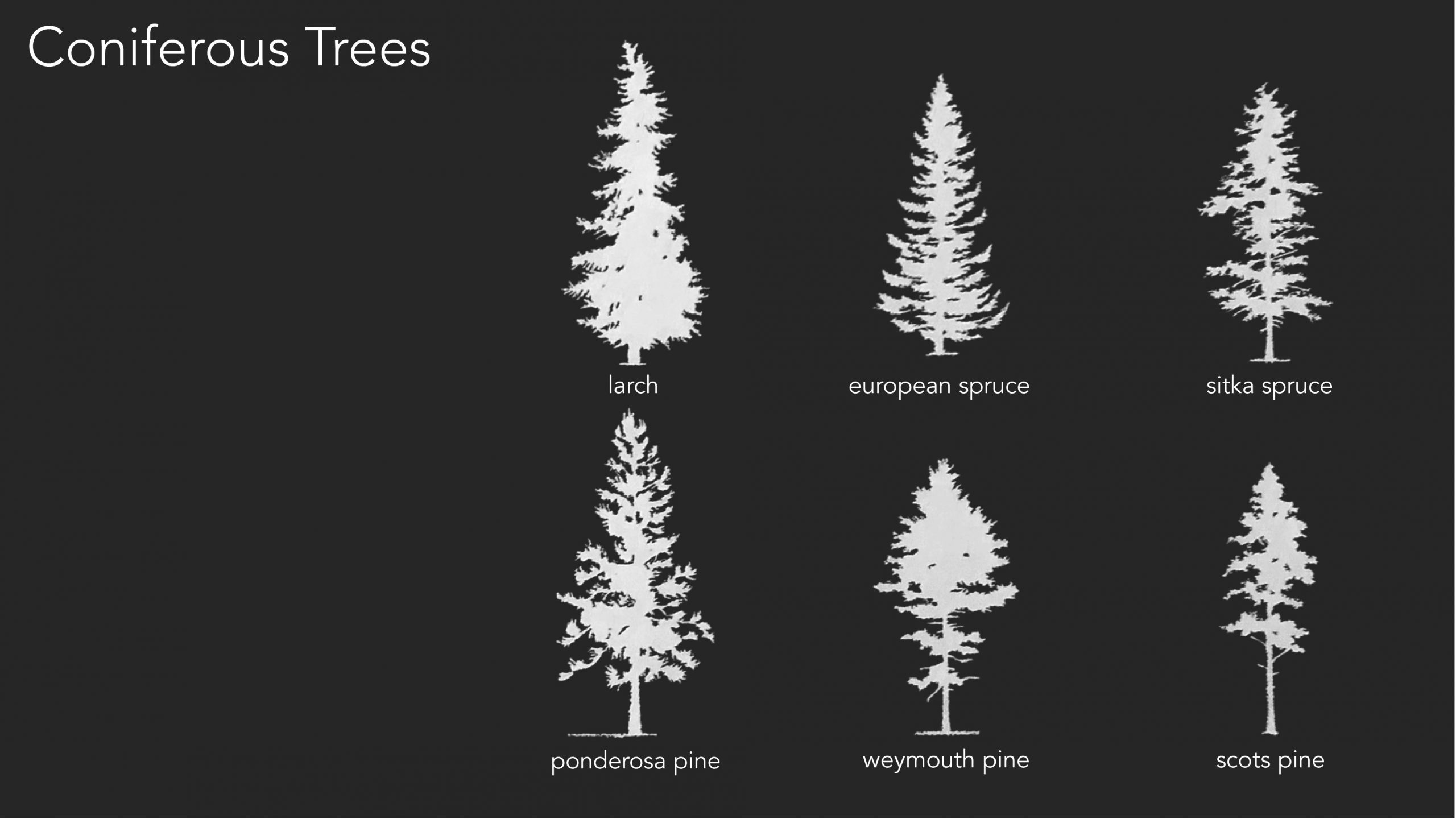
Trees grow externally adding a layer to the annual growth ring. Heartwood has reached maturity and is targeted for commercial use, while sapwood is routed for use as pulpwood (paper, fiberboard, chipboard) together with discarded bark and inner bark.
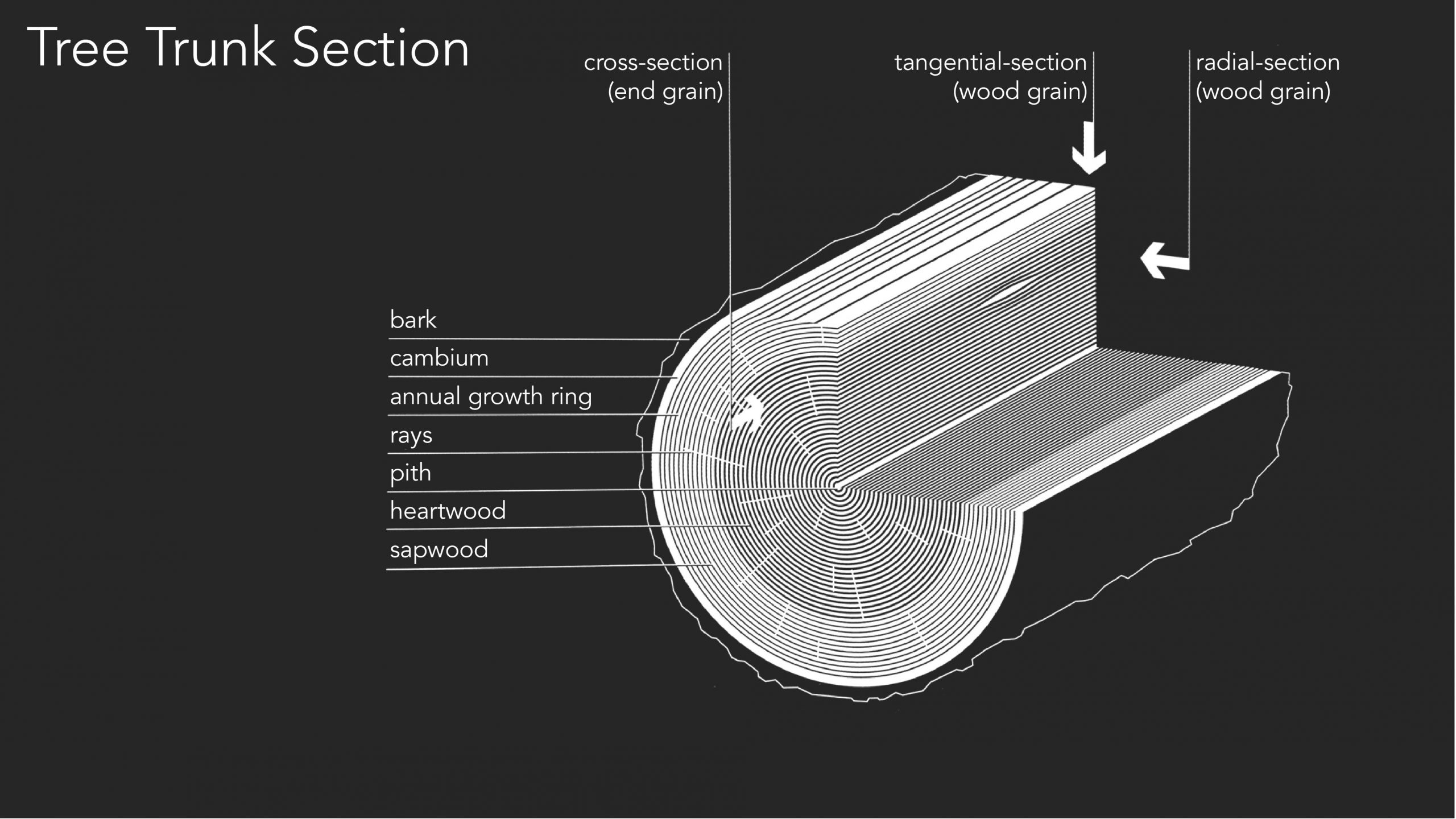
Dating as far back as 10,000 BC, wood is a ‘natural polymer’ and is one of the earliest materials used for making tools and objects.
click on image to enlarge >
/ Taxonomy
Further References >
Kula & Ternaux – Materiology: the creative industry’s guide to materials and technologies; Wood (pp 11-16).
Lefteri, Chris – Materials for Design; Softwood (pp 14-23), Hardwood (pp 24-49).
Thompson, Rob – The materials sourcebook for design professionals; Wood (pp 268-379).
Thompson, Rob – The materials sourcebook for design professionals; Wood (pp 268-379).
Thompson, Rob – Manufacturing processes for design professionals; Naturals & Wood (pp 464-481).
The Wood Database – http://www.wood-database.com
Methods
/ Overview
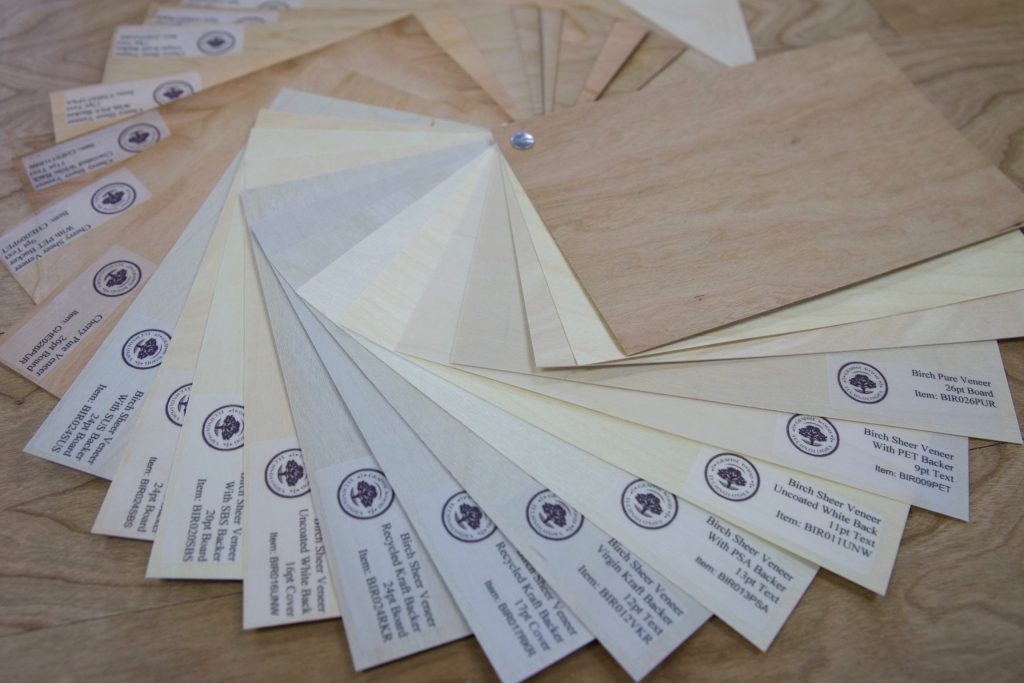
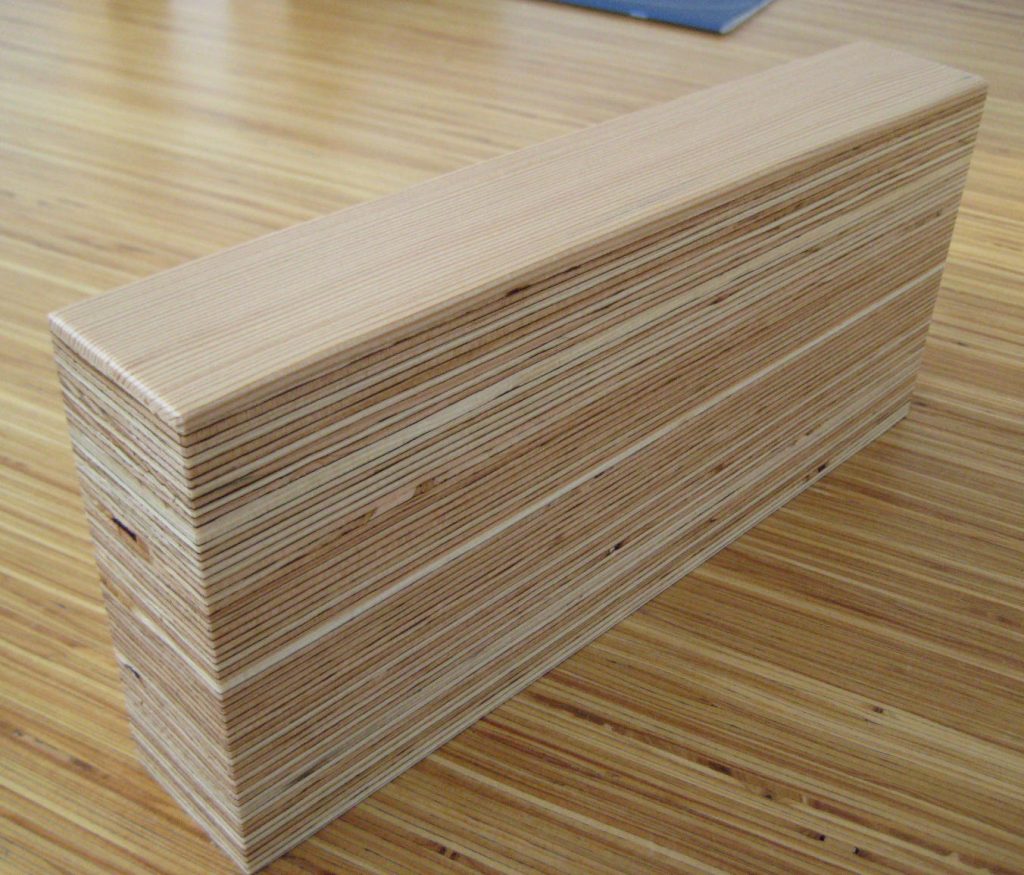
Wood is used as logs, lumber, veneer, panel products, engineering timber, pulp and paper. Lumber is sawn timber and comes in a range of profiles and sizes from only a few millimeters up to 75mm x 250mm. Veneers are produced by cutting very thin strips of wood, between 1mm and 5mm thick, from logs. They are used in the construction of laminates and for surfacing of other materials. Panel products are made of wood veneers, particles or core materials that are bonded together with strong adhesives and high pressure. Engineering timbers utilize the strength and stability of laminated wood. Wood pulp is used in the production of paper and pulp.
Thompson, Rob – Manufacturing processes for design professionals; Wood (pg 465).
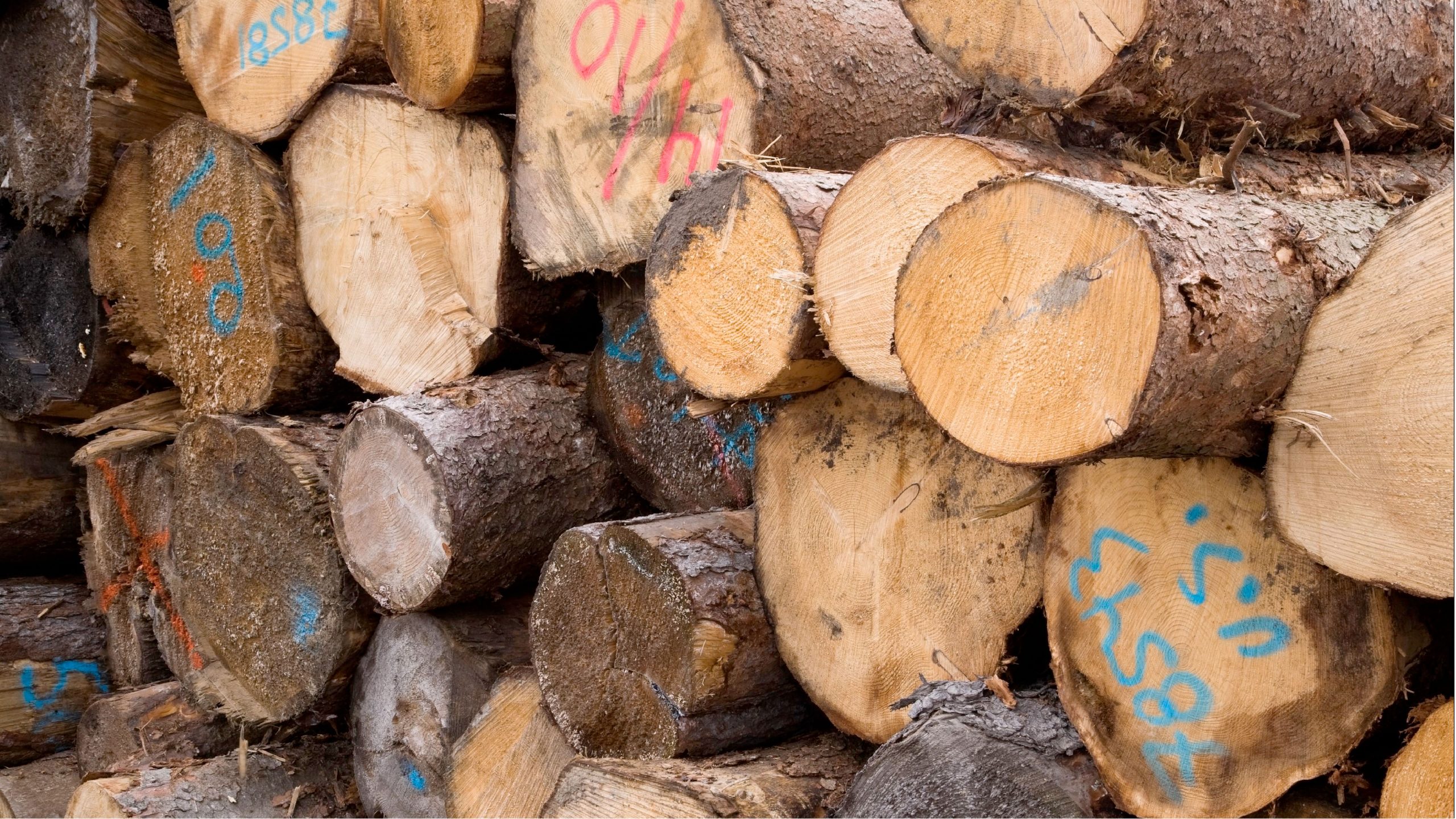
Harvested trees are cut into logs for transport to a mill for further cutting and processing.
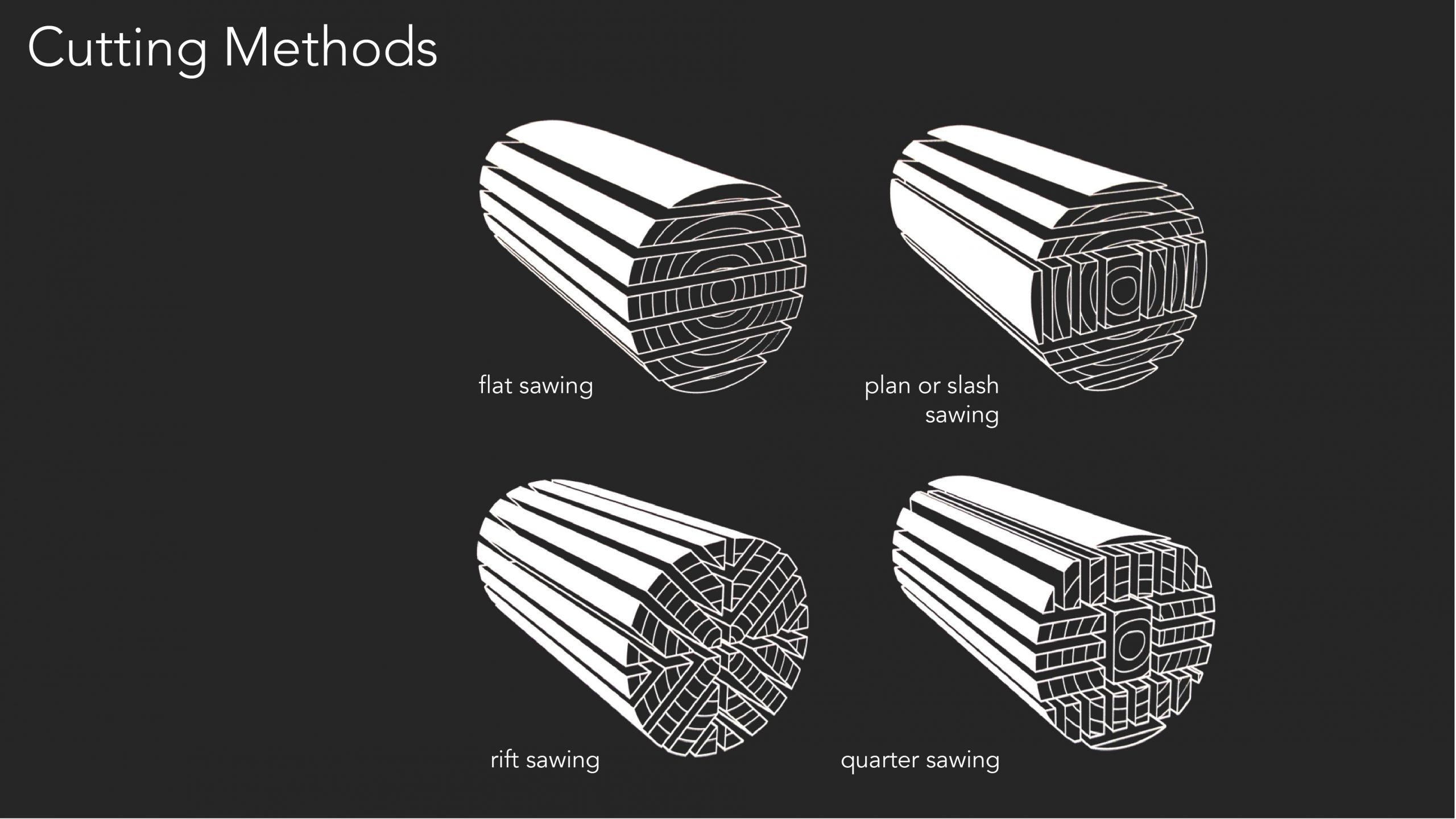
The most popular and economical methods of milling are plain or slash sawing and flat sawing. The quality of wood is very irregular but losses are limited. Rift sawing or quarter sawing ensures a more uniform, strong and consistent flat-grained wood is produced.
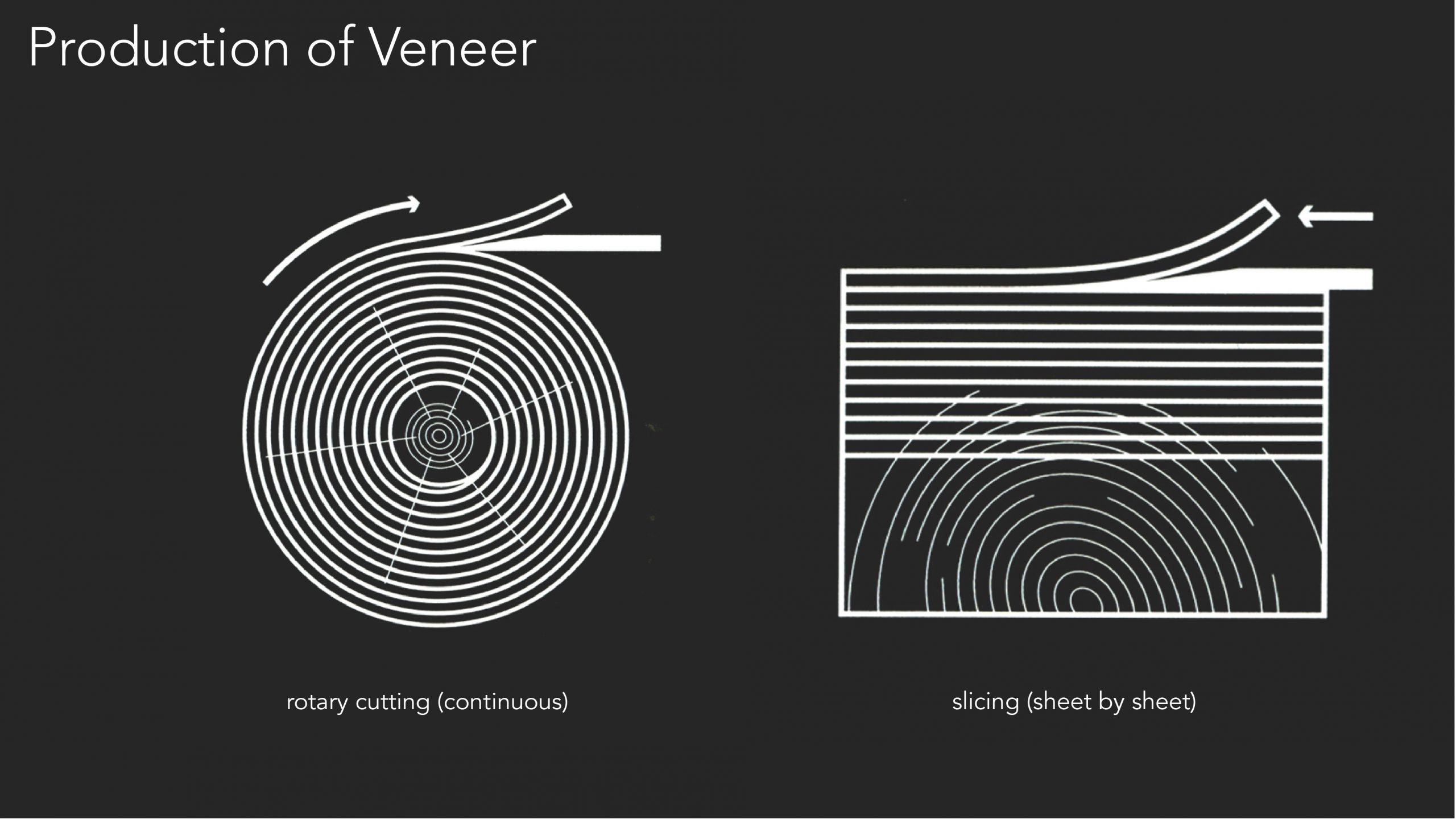
To optimize processes, milling uses computer-controlled saws which enables sawing depending on use including planks, strips, joists, studs and wall posts. Producing wood veneer entails two approaches: fine slicing or rotary cutting.
Shaping, Joining and Finishing process methods for Wood.
click on image to enlarge >

/ Manufacturing
Shaping
CNC Machining
Laminating
Laser Cutting
Paper Pulp Molding
Steam Bending
Joining
Fastening
Joinery
Weaving
Finishing
Engraving
Oiling
Painting
Sanding
Staining
Stamping
Varnishing
Shaping >
CNC Machining
Ercol Furniture
01:18
Veneer Production
M. Bohlke
05:47
Wood Laminating
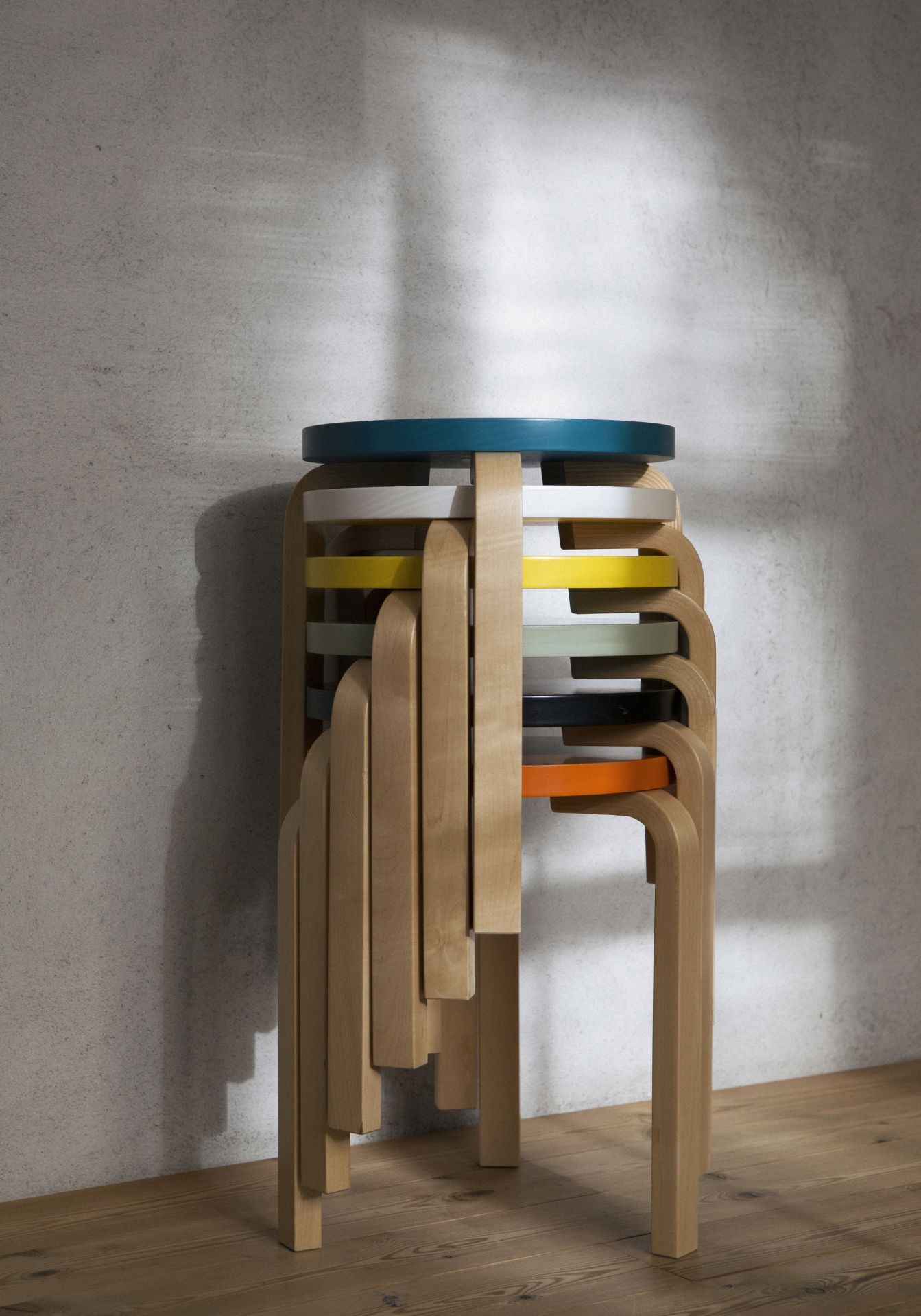
Stool 60
Alvar Aalto, Artek
03:55
Wood Laminating, Molding
Series 7 Chair
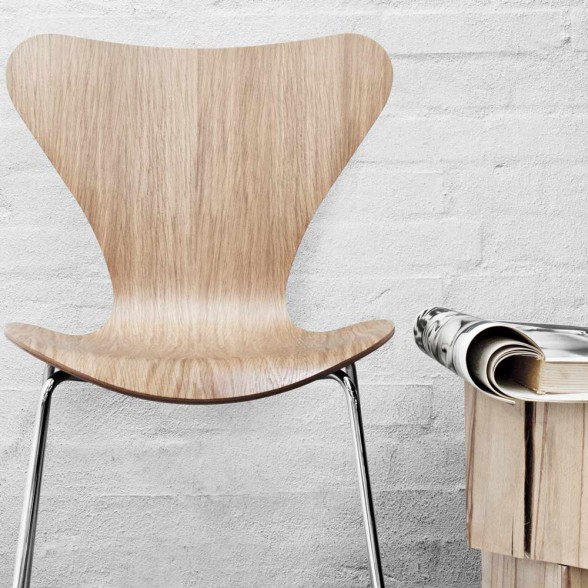
Arne Jacobsen, Fritz Hansen
05:34
Wood Bending
Chair No. 14
Michael Thonet, Thonet GmbH
04:39
Paper Pulp Molding
How Its Made
04:50
Wood Turning
MLB Prime Ash Baseball Bat
John Hillerich, Louisville Slugger
01:53
Wood Veneer Paneling
Continental GTC
Bentley Motors
13:00
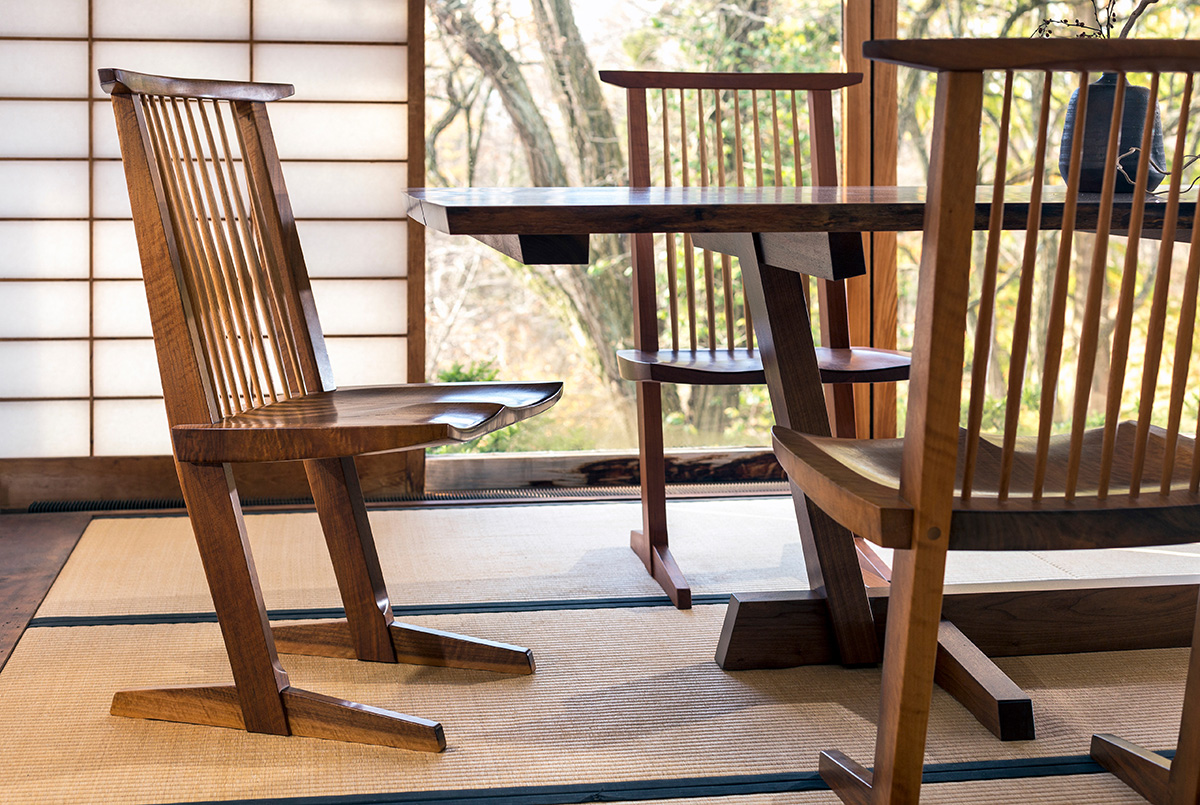
Wood Furniture Crafting
George Nakashima
09:19
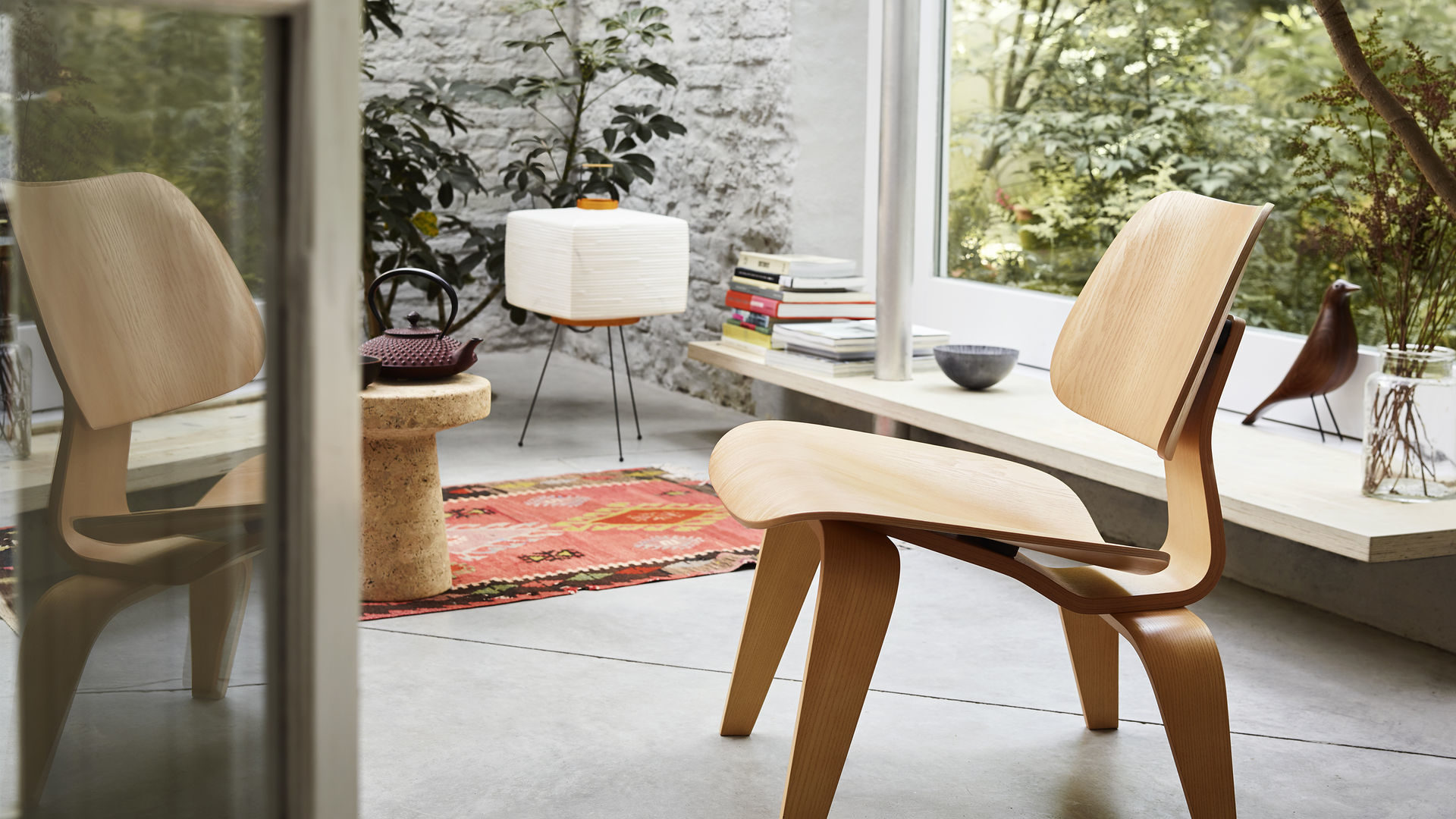
Wood Molding
Eames LCW
Charles & Ray Eames, Herman Miller
05:40
Wood Molding
Eames Lounge Chair
Charles & Ray Eames, Herman Miller
08:17
Further References >
Kula & Ternaux – Materiology: the creative industry’s guide to materials and technologies; Wood (pp 11-16).
Lefteri, Chris – Materials for Design; Softwood (pp 14-23), Hardwood (pp 24-49).
Thompson, Rob – The materials sourcebook for design professionals; Wood (pp 268-379).
Thompson, Rob – The materials sourcebook for design professionals; Wood (pp 268-379).
Thompson, Rob – Manufacturing processes for design professionals; “Forming: Wood” (pp 182-205); “Cutting: Wood” (pp 248-251; 266-271); “Joining: Wood” (pp 324-331; 344-347); “Finishing: Wood” (pp 350-355; 396-415); “Materials: Naturals & Wood” (pp 464-481).