
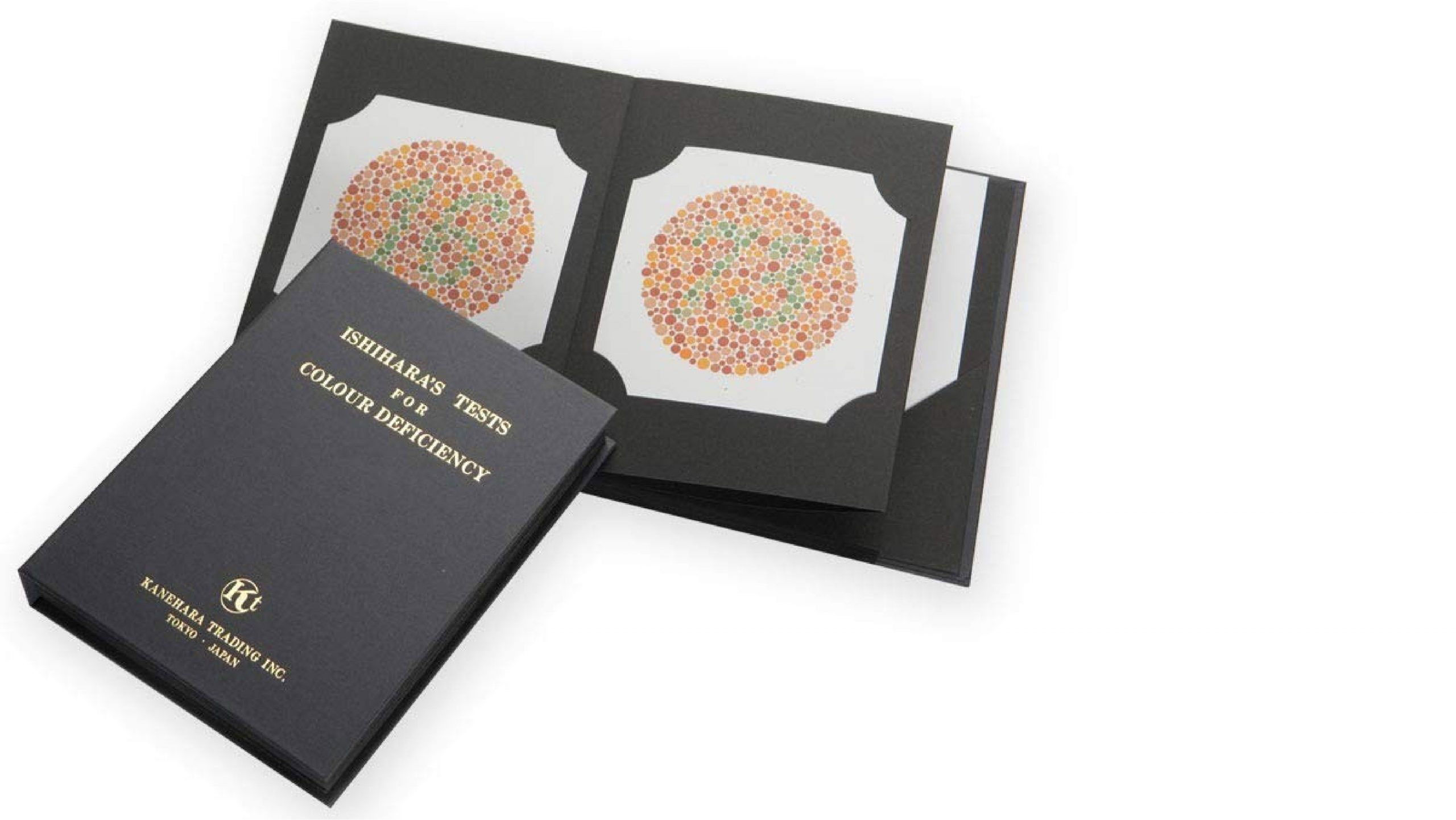
The Ishihara Test is a color perception test for red-green color deficiencies.
The Ishihara test is a color perception test for red-green color deficiencies, the first in a class of successful color vision tests called pseudo-isochromatic plates (“PIP”). The test consists of a number of Ishihara plates, each of which depicts a solid circle of colored dots appearing randomized in color and size. Within the pattern are dots which form a number or shape clearly visible to those with normal color vision, and invisible, or difficult to see, to those with a red-green color vision defect.
Design
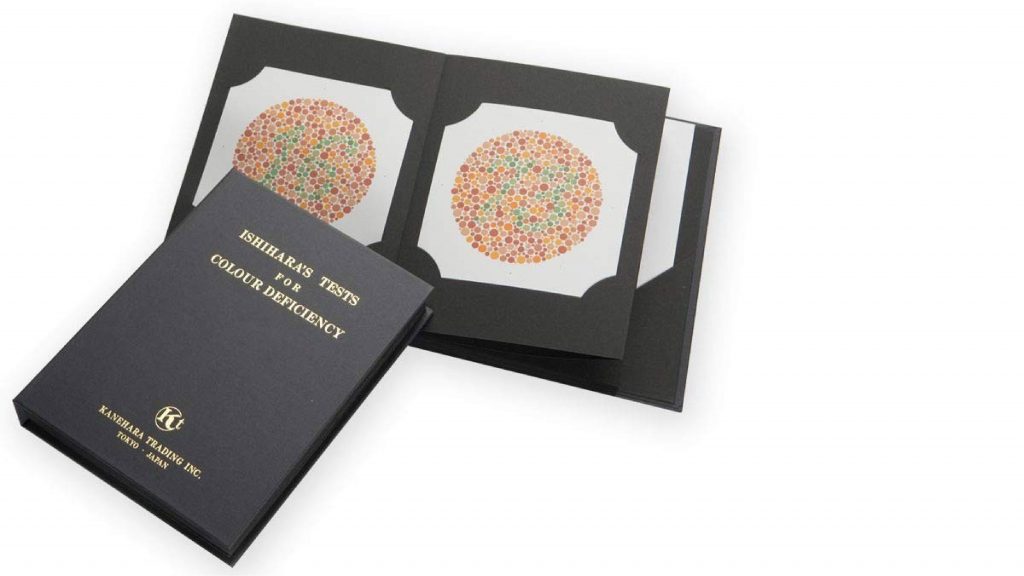
Test Book
The collection of plates is housed in the Test Book contained in a sleeve. Each plate is archived in a page and the book is an accordion of pages.
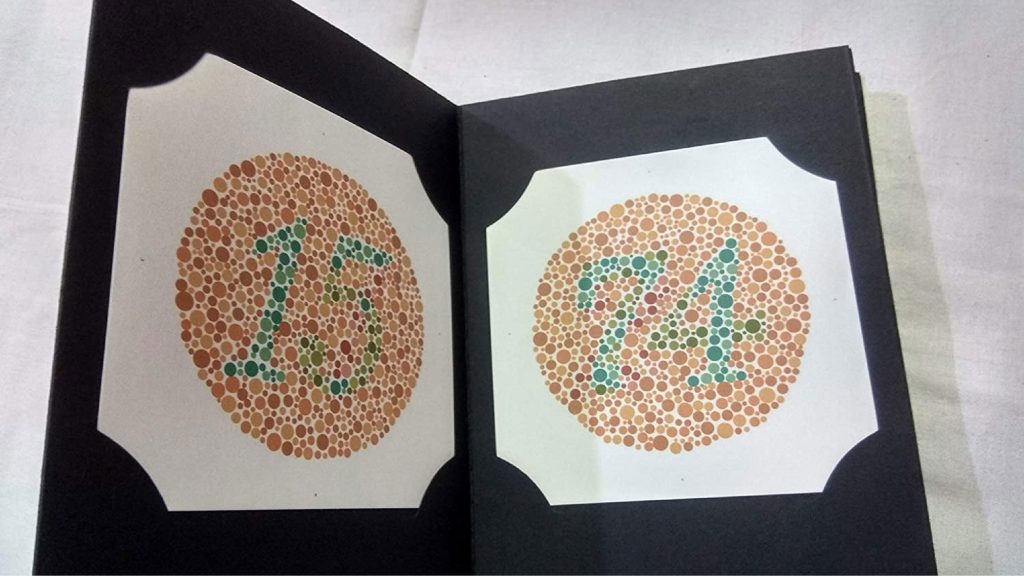
Color Plate
The Test Book contains 38 plates which test for different types of color vision deficiencies.
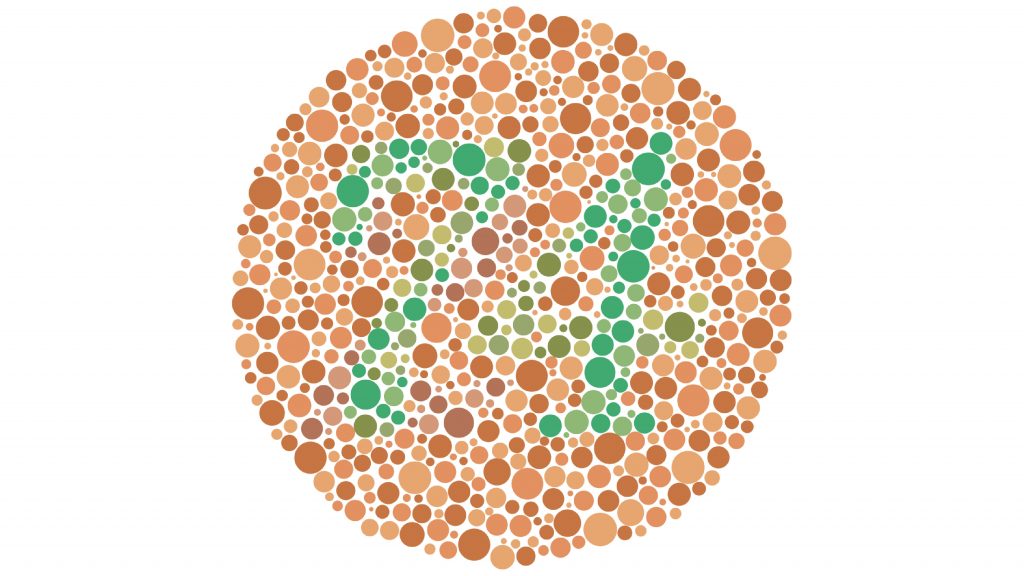
Color Plate Types
The types of test are: 1) Transformation – individuals with color vision defect should see a different figure from individuals with normal color vision; 2) Vanishing – only individuals with normal color vision could recognize the figure; 3) Hidden digit – only individuals with color vision defect could recognize the figure; 4) Diagnostic – intended to determine the type of color vision defect (protanopia or deuteranopia) and the severity of it; 5) Tracing – instead of reading a number, subjects are asked to trace a visible line across the plate.
The Ishihara Test for Colour Vision
USYD Physiology
08:08