
/ Blog

Explore CMTEL’s trends blog featuring searchable and filterable posts.
/ Channels
Explore external links to fabric-based materials and design trends.

Core77’s Materials section serves a devoted global audience of industrial designers ranging from students through seasoned professionals.
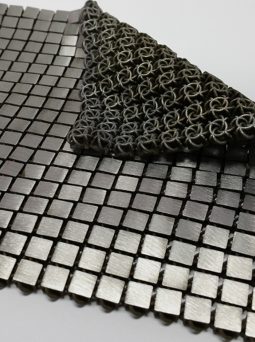
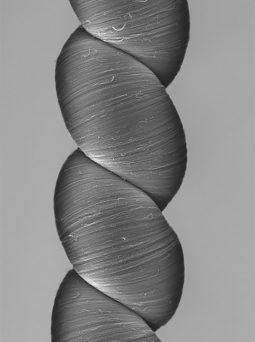

New York based Material Connexion’s libraries and database provide global materials inspiration.
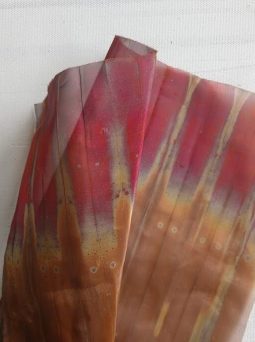

Netherlands based MaterialDistrict’s database, articles and events provide materials inspiration with European emphasis.

UK based Stylus offers reports, webinars, workshops and events for businesses to forecast cross-industry trends and consumer shifts.



Transmaterial is curated by Minnesota based Blaine Brownell, architect and former Fulbright scholar with a focus on emergent materials and applications.
Material
/ Overview
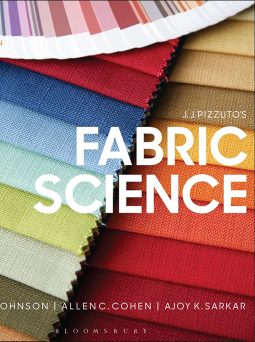
The process of developing textile products for the home, fashion apparel, and high-tech industries begins with a thorough understanding of fibers and their properties. This essential groundwork helps produce fabrics with end-use characteristics consistent with the consumer’s expectations…
A fiber is an individual, fine, hairlike structure. Fibers have a comparatively high ratio of length to width, thus ensuring the flexibility required for manufacturing and end use. Differences among the textile fibers result from their different chemical compositions, the arrangement of their molecules, and their external features (e.g. shape). Fibers are usually grouped and twisted together into continuous strands called yarns. The yarns are then used to make various textile materials (e.g. woven fabrics, knitted fabrics, lace).
Fibers can also be used directly to make a fabric without first being made into yarns. Felt and nonwoven materials (e.g. interfacing) are two examples of fabrics made directly from fibers.
Cohen & Johnson – J.J. Pizzuto’s Fabric Science; (pg 20).
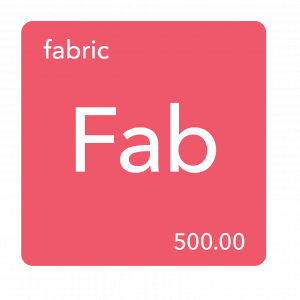
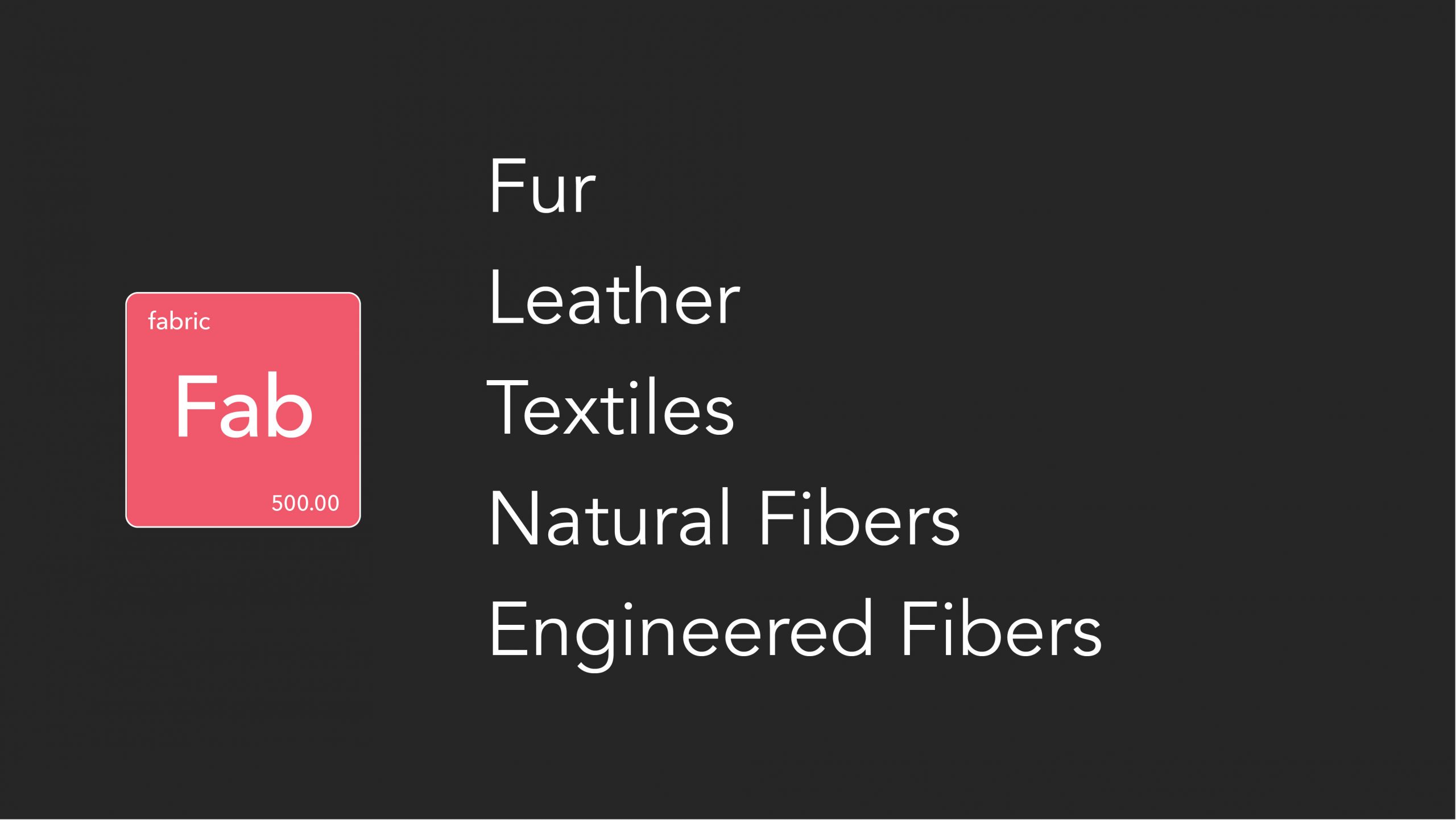
CMTEL’s materials library is organized by a numerical system to identify specific classes within a material family:
Fabric is designated 500.00. To see the full taxonomy of polymer scroll to the “Taxonomy” section below. For a complete materials taxonomy visit the CMTEL Taxonomy page.
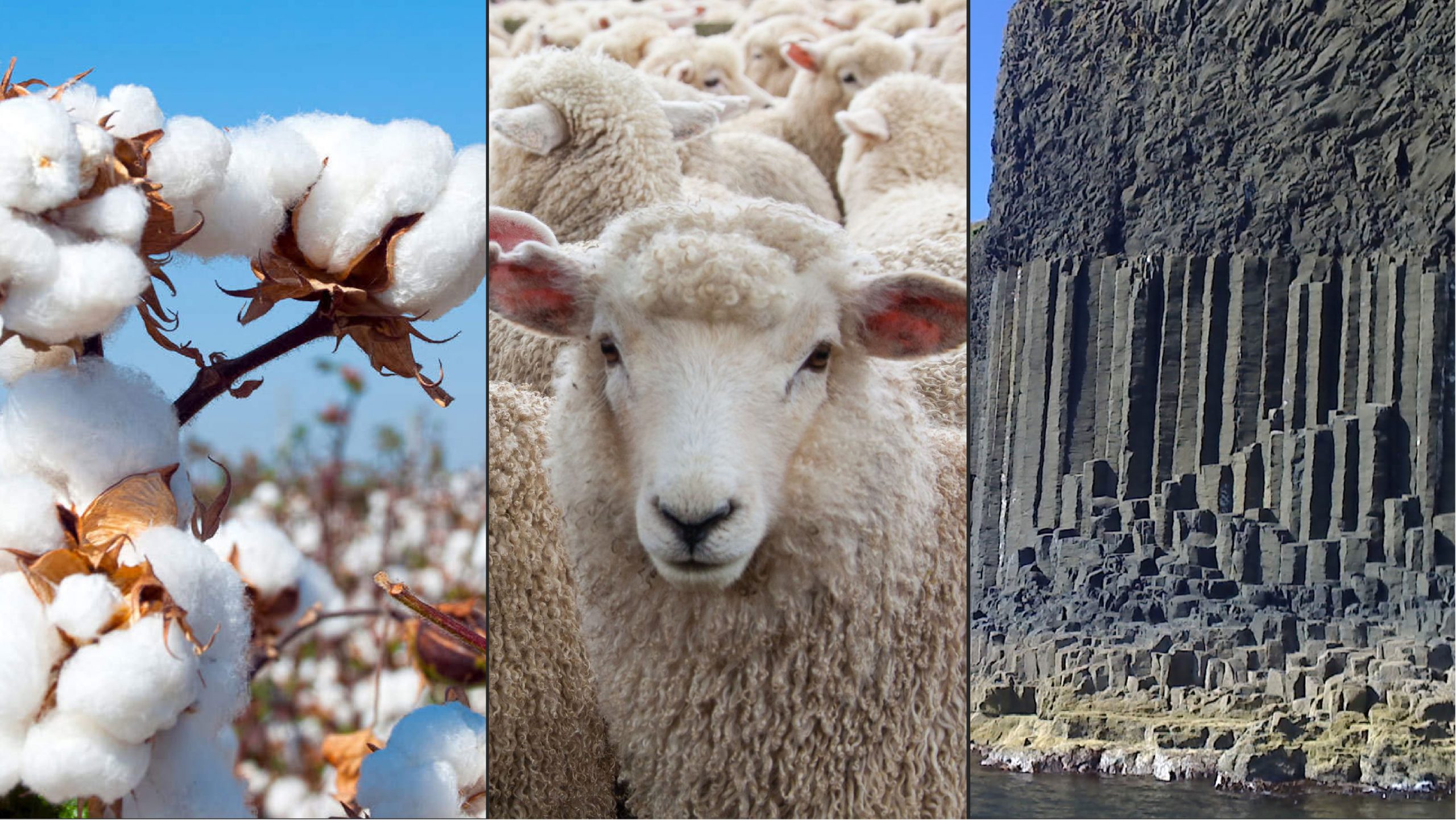
Natural fibers are divided into three categories: Vegetable fibers (cellulose-based such as cotton, flax, hemp, kapok); Animal fibers (wool, silk); and Mineral fibers (glass, basalt).
Engineered fibers are produced by forcing (or extruding) forming materials into fiber. These can be divided into two categories: Artificial fibers, based on vegetable, animal or mineral constituents that have been modified (cellulose is modified to provide viscose); and Synthetic fibers (nylon, polyester, etc).
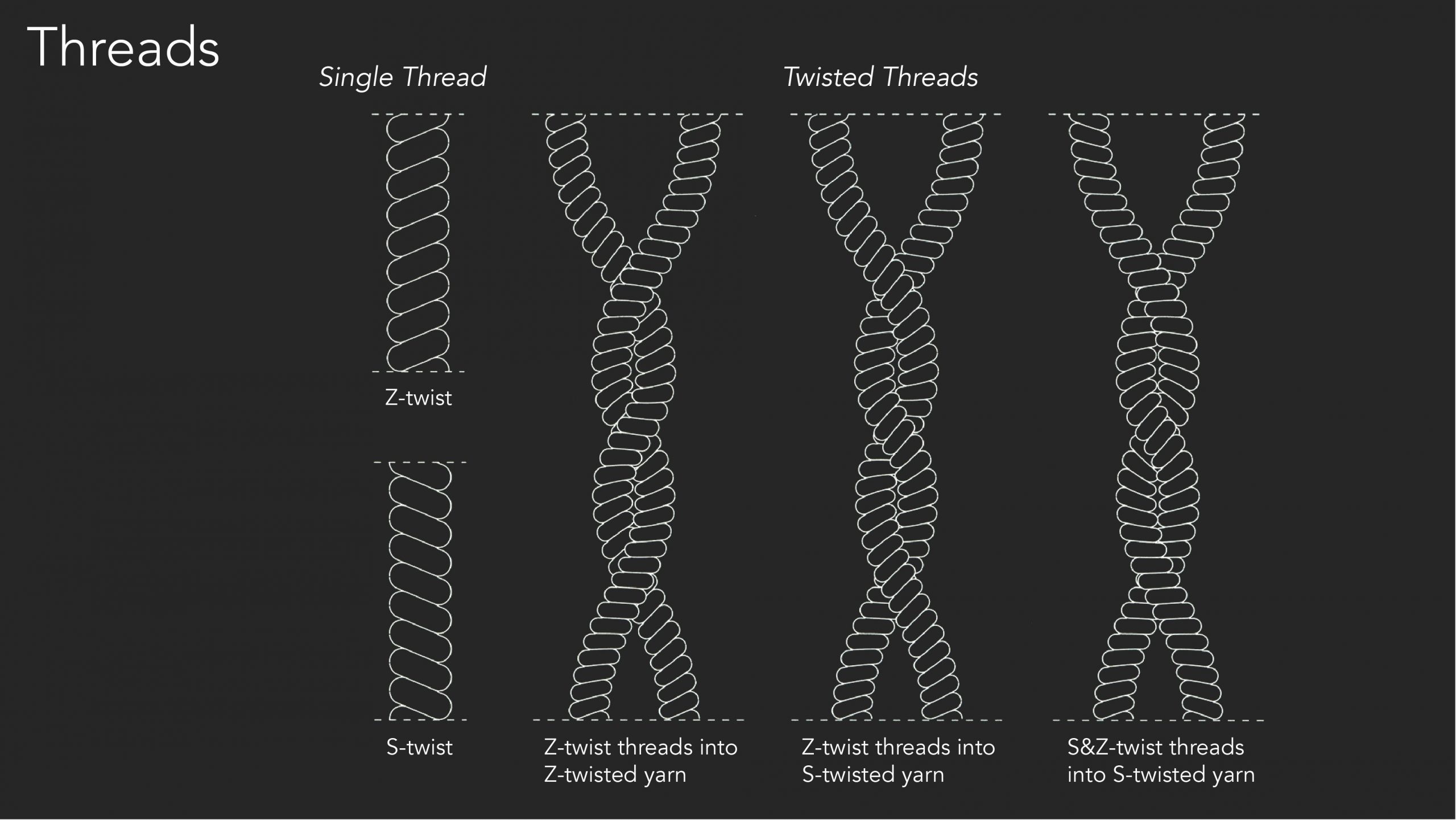
Each individual fiber has its own characteristics and as such, the lengths and strengths are not sufficient, nor uniform enough to be knitted. Therefore, fibers need to be worked and assembled into yarn (or thread) of a continuous length and constant diameter.
/ Taxonomy
Fibrous Wood, Grass, Leaves
Bamboo
Bark
Cork
Flowering Plants
Hardwood
Leaves
Rattan
Softwood
Leather and Fur
Cowhide and Calfskin
Deerskin
Fish Skin
Fox, Wolf and Coyote Fur
Goatskin and Kidskin
Horsehide and Pony
Mink and Sable Fur
Ostrich Skin
Pigskin
Rabbit and Chinchilla Fur
Reptile Skin
Sheepskin and Lambswool
Mineral Fiber
Basalt
Glass
Natural Protein Fiber
Angora
Camel
Cashmere
Mohair
Llama and Alpaca
Silk
Vicuna and Guanaco
Wool
Yak
Plant Fiber
Coir
Cotton
Flax
Hemp
Jute and Kenaf
Leaf Fibers
Natural Bamboo Fiber
Raffia
Regenerated Fiber
Azlon
Cellulose Acetate
Lyocell
Viscose
Synthetic Fiber
Acrylic
Bioplastic
Elastane
Nylon
Polyester
Polyethylene (PE)
Polypropylene (PP)
Polyurethane (PU)
Polyvinyl Chloride (PVC)
Silicone
Synthetic Rubber
Specialty Fiber
Aramid
Carbon Fiber
Liquid Crystal Polymer (LCP)
Metal Fiber
Polyphenylene Benzobisoxasole (Zylon)
PolyTetrafluoroethylene (PTFE)
Further References >
Johnson & Cohen – J.J. Pizzuto’s Fabric Science.
Kula & Ternaux – Materiology: the creative industry’s guide to materials and technologies; Leather, Hide (pp 32-38); Textiles (pp 80-88).
McQuaid, Matilda – Extreme textiles: designing for high performance.
Thompson, Rob – Manufacturing processes for textile and fashion design professionals.
Thompson, Rob – The materials sourcebook for design professionals; Plant (pp 380-417); Animal (pp 418-469).
Methods
/ Overview
The first step in processing fiber toward making fabric is the production of yarn. There are two ways of producing yarn. Spinning consists of twisting together short discontinuous fibers, which are often natural fibers (cotton, flax, wool) and sometimes cut man-made fibers. After cleaning (to remove impurities), the loosely bundled fibers are aligned by means of carding, then combined, in parallel, to form a carded sliver (a loose rope of fibers). The sliver then undergoes drawing and twisting, which strengthens fiber cohesion. This is referred to as roving, which is drawn and twisted again, to become yarn.
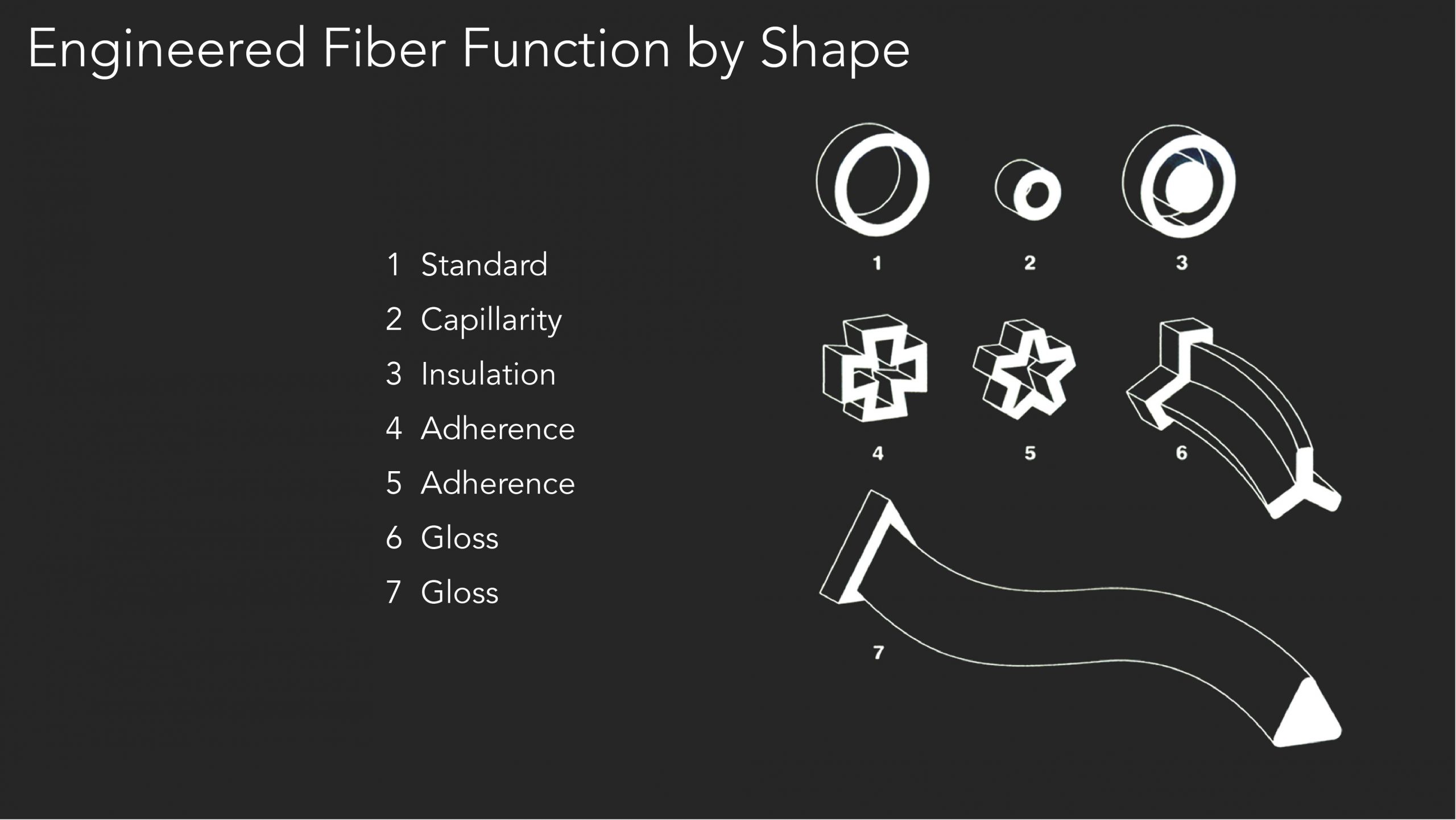
The second way is Reeling. This consists of pulling out long, continuous fibers, and is performed on engineered fibers. Reeling is a form of extrusion. The material (polymers) is fed through a spinneret under pressure. The shape of the spinneret is very important as it determines the profile and the diameter of the filament. The shape of the filament determines its characteristics: luster (whether it is matte or shiny, luminous, or reflective, etc), properties of adhesion or absorption, texture, flexibility and how fine it is. While the shape of engineered fibers can be manipulated during this process, making a number of variations and applications possible, natural fibers have pre-defined shapes.
Once the yarn is ready, it can then be woven to produce fabrics. The principle behind weaving us even and alternate crossing of perpendicular threads: the warp (vertical) and the weft (horizontal). The pattern produced is called the weave type. By varying the weave types, different fabrics can be produced. There are three basic types, which are the starting points for all other variations: Plain Weave, Twill Weave, and Satin Weave.
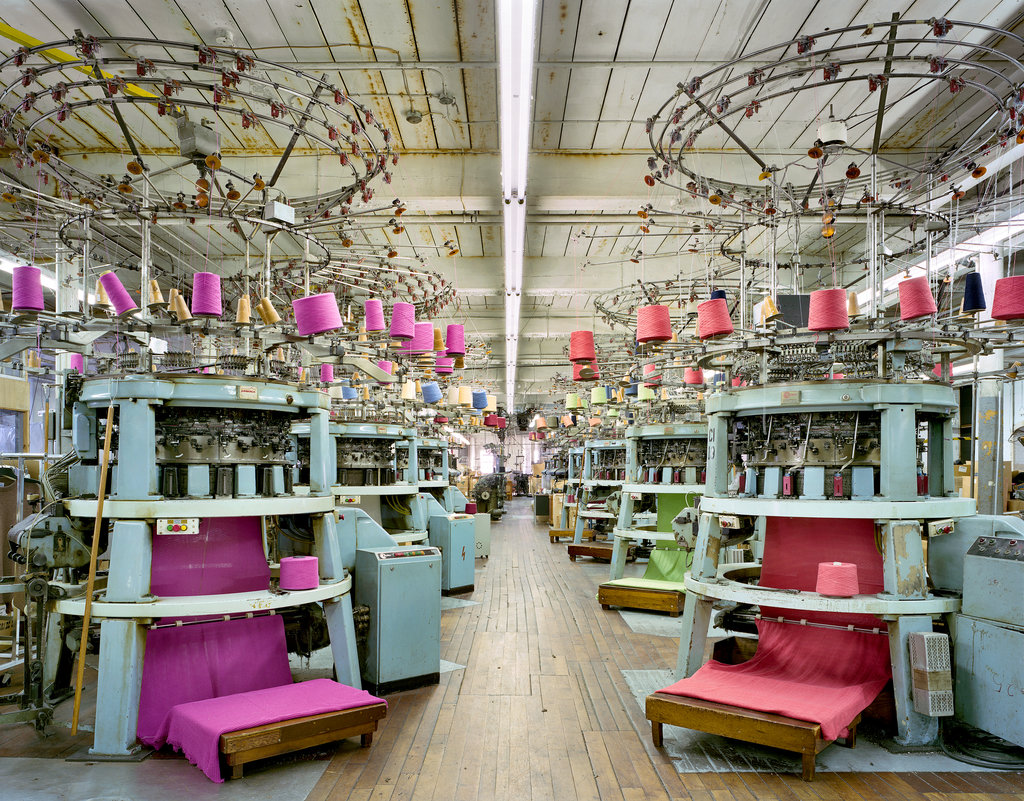
Knitted fabrics are made of loops of yarn, linked together to make stitches. While the threads and yarns in woven fabrics cross in straight lines, knitting interlinks yarns in a curvilinear fashion. There are two main types of knitted fabric: Weft-knits and Warp-knits.
Finally, there are Nonwoven fabrics. These are formed by matting (intended or accidental) of natural or engineered fibers. Fiber cohesion is obtained through mechanical procedures (applying pressure), physical procedures (heating), or chemical procedures (gluing).
Kula & Ternaux – Materiology: the creative industry’s guide to materials and technologies; Textiles (pp 82-87).
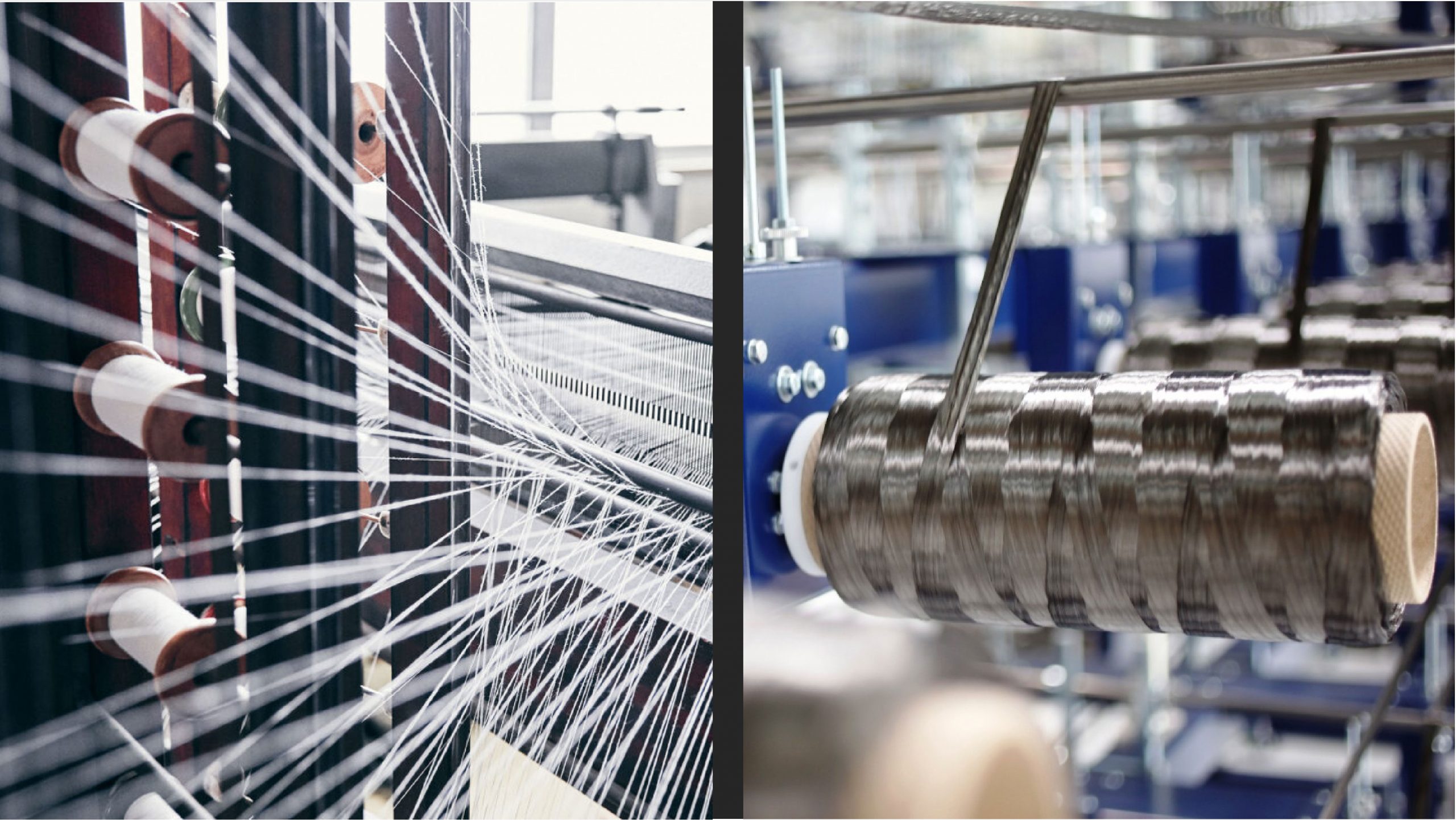
Spools of natural fiber yarn are directed into weaving (cotton yarn, left) or knitting machines. Similarly, engineered fiber yarn (carbon fiber, right) can be processed by weaving into fabric.
The simplest, oldest and most widely used weave type. The weft goes under and over the warp at regular intervals and the under-over order is reversed for each new line. The different weave types can be represented diagrammatically by a Jacquard card type pattern. This helps the weaver see the pattern of weft and warp.
The yarns are less tightly woven as the weft goes over two warp yarns at a time and then under just one. Each row is offset from the last, creating a diagonal effect in the finished cloth, as with denim, for example.
The weft goes over multiple warp yarns (the number varies with the type of satin or sateen) and then under one single warp. The cloth produced is therefore more fluid. Satin cloth has a uniform and shiny front and are matte on the reverse.
There are two types of knits. Weft-knits: the stitches are made of one continuous yarn, making the loops of each row. This type of knitting gives the fabric stretch in both directions. However, it only takes one break in the yarn for the whole thing to unravel. Jersey knit, rib knit and Jacquard knit are all weft knits.
Warp-knits: this techniques uses multiple yarns and needles. In each row (or ‘course’), stitches are made simultaneously using separate yarns. For the next course, the stitches in the same column (or ‘wale’) will be made by another needle, using another yarn, thus linking the entire piece of fabric together. Warp-knits are less stretchy than weft-knits, but are more solid and less likely to ‘run’.
A layer of fibers is created in one of three ways: either under dry conditions by laying fibers on top of one another after carding; or under wet conditions, as with paper, to make a pulp of fibers from which the water evaporates; or finally by melting the fibers together, as with synthetic fibers, immediately after extrusion. The layer is then bonded either mechanically (by a needleloom process), physically or chemically (using a binder).
/ Finishes
Depending on when colour is introduced in the production of a textile, a wide range of patterns and effects can be achieved with dyeing. It produces durable and high-quality colour because the colourant penetrates into the structure of the fiber. Patterned and feathered colors are formed by combining different-colored fibers or yarns into the structure of a textile.
Dyeing uses the same chemicals as printing; the difference is that dyeing involves immersing the material in dye solution to achieve a solid colour throughout, while printing is used to reproduce multicolored patterns and designs on the surface.
Virtually all textiles are coloured in some way. If not dyed, then the colour will come from the base material, or is added during filament extrusion or printed. Dyeing is used to add a base colour for printing. Known as ground, a dyed background is either printed over or removed by discharge printing.
– Thompson, Rob. Manufacturing Processes for Textile and Fashion Design Professionals. p240
/ Manufacturing
Fiber & Yarn Technology
Preparing
Bast Fibers
– Flax-Fiber Conversion
Cotton
– Organic Production
Leaf Fibers
– Abaca Production
Silk
– Sericulture
Wool and Hair
– Grading and Scouring Wool
– Carding / Combing
Forming
Braiding
– Single Braided
Filament Spinning
– Melt Spinning
Plying and Twisting
– Ring Spinning Ply Yarn
– Twisting Ply Yarn
– Twisting Rope
Staple Yarn Spinning
– Carding and Ring Spinning
Textile Technology
Knitting
Circular Knitting
Warp Knitting
– Warping
– Seamless Warp Knitting
Weft Knitting
– Plain Jersey Knitting
– Fancy Knitting
– Double-face Fabric Knitting
Weaving
Basket Weaving
Fancy Loom Weaving
– Jacquard Weaving
Hand Weaving Lace
Handloom Weaving
– Velvet Weaving
– Brocade Weaving
Loom Weaving
– Check-pattern Weaving
– Weaving Narrow Widths
– Circular Loom Weaving
Machine Weaving Lace
Pile Weaving
– Double Cloth Weaving
– Over-wire Weaving
– Carpet Production
Other Sheet
Natural Rubber and Latex
Leather Tanning
– Chrome Tanning
– Retanning, Dyeing and Finishing
Nonwoven
– Fiber Web Forming
– Needle Punching
Construction Technology
Cutting
CNC Cutting
Die Cutting
Laser Cutting
Manual Cutting
Slitting and Crosscutting
Joining
Adhesive Bonding
Hand Stitching
Lining and Labeling
Linking, Looping and Closing
Machine Stitching
Mechanical Fastening
Upholstery
Welding
Molding
3D Thermal Laminating
Additive Manufacturing
– FDM
Boarding
Composite Press Forming
Dip Molding
Filament Winding
Foam Molding
Hat Blocking
Leather Molding
Fiber & Yarn >
Blow Molding
Extrusion Blow Molding Process
01:56
Blow Molding
Injection Blow Molding Process
00:50
Harvesting Wool
Wool Processing Mill
09:58
Textile >
Leather Tanning
The Leather Tanning and Finishing Process
Optima Leather
24:38
Blow Molding
Injection Blow Molding Process
00:50
Blow Molding
Injection Stretch Blow Molding Process
SMF Germany GmbH
03:23
Further References >
Kula & Ternaux – Materiology: the creative industry’s guide to materials and technologies; Leather, Hide (pp 32-38); Textiles (pp 80-88).
McQuaid, Matilda – Extreme textiles: designing for high performance.
Thompson, Rob – Manufacturing processes for textile and fashion design professionals.
Thompson, Rob – The materials sourcebook for design professionals; Plant (pp 380-417); Animal (pp 418-469).
McQuaid, Matilda – Extreme textiles: designing for high performance.
Thompson, Rob – Manufacturing processes for textile and fashion design professionals.
Thompson, Rob – The materials sourcebook for design professionals; Plant (pp 380-417); Animal (pp 418-469).
/ Products
How a Canada Goose Parka is Made
Canada Goose
BRANDMADE.TV
06:04
How a Frette Sheets are Made
Frette
BRANDMADE.TV
05:54
How a Hart Schaffner Marx Suit is Made
Hart Schaffner Marx
BRANDMADE.TV
06:22
The Science Behind Gore-Tex
Arc’Teryx
07:31
How a Schott Motorcycle Jacket is Made
Schott NYC
BRANDMADE.TV
05:42
How a Stetson Cowboy Hat is Made
Stetson
BRANDMADE.TV
08:08
Vision iNext Experience
BMW
00:52
t
t